


You are at your Wilmington kitchen table holding an inspection report with one awful phrase: never permitted. Maybe it is the bonus room over the garage or a downstairs hangout under a beach house. Now you wonder if this detail just killed your sale.
Good news: you can sell a house with unpermitted work in North Carolina. Success depends on how you handle permits and disclosure. It also depends on whether you fix the work, permit it after the fact, or sell as-is.
This guide explains how the process usually plays out around Wilmington and coastal North Carolina. We cover what counts as unpermitted work, what the disclosure form asks, and how buyers and lenders react. Then we walk through your real-world options.
What counts as unpermitted work when selling a house in North Carolina?
You walk past the finished room over the garage and wonder whether anyone pulled a permit. Then a bigger worry hits. Could this one project ruin your sale?
Unpermitted work is any construction, alteration, or system work that legally needed a permit but never got one. That includes building, electrical, plumbing, and mechanical permits that were never pulled or properly closed out. In plain English, the project skipped the normal permit and inspection process.
That does not automatically mean the work is unsafe or illegal in a criminal sense. It simply means safety checks and code reviews may not have happened. Statewide permit and enforcement rules come from Chapter 160D of the North Carolina General Statutes.
| Common unpermitted project | Why it draws attention |
| Bonus room above the garage | Often converted attic space without inspections |
| Garage conversion | Parking turned into a den or extra bedroom |
| Rebuilt or extended deck | Structural safety in coastal wind and storms |
| Ground-level enclosure under a beach house | Flood-zone rules for lower levels |
| Shed with full electrical service | Wiring done without inspection |
| DIY electrical or plumbing changes | Fire, leak, and code concerns |
From a seller’s perspective, unpermitted work usually creates four kinds of trouble:
- Safety worries about structure, wiring, and coastal wind or flood resistance
- Insurance concerns if carriers believe work was not done to code
- Appraisal questions because unpermitted space may not receive full value
- Disclosure risk if you knowingly hide the work from buyers
Older Wilmington homes often carry layers of improvements from several owners. Experienced as-is buyers expect enclosed lower levels or DIY decks here. They usually price that risk into the offer instead of sending you on a permit scavenger hunt.
North Carolina’s disclosure form: what you must say about unpermitted work
Picture a thick stack of listing paperwork with your highlighter stuck on the permits question. Will admitting a problem scare off buyers? Or could staying vague come back to haunt you later?
North Carolina uses the Residential Property and Owners’ Association Disclosure Statement for many home sales. The NC Real Estate Commission’s REC 4.22 disclosure form asks what you know about the property’s condition. One section covers additions or improvements and whether required permits were obtained.
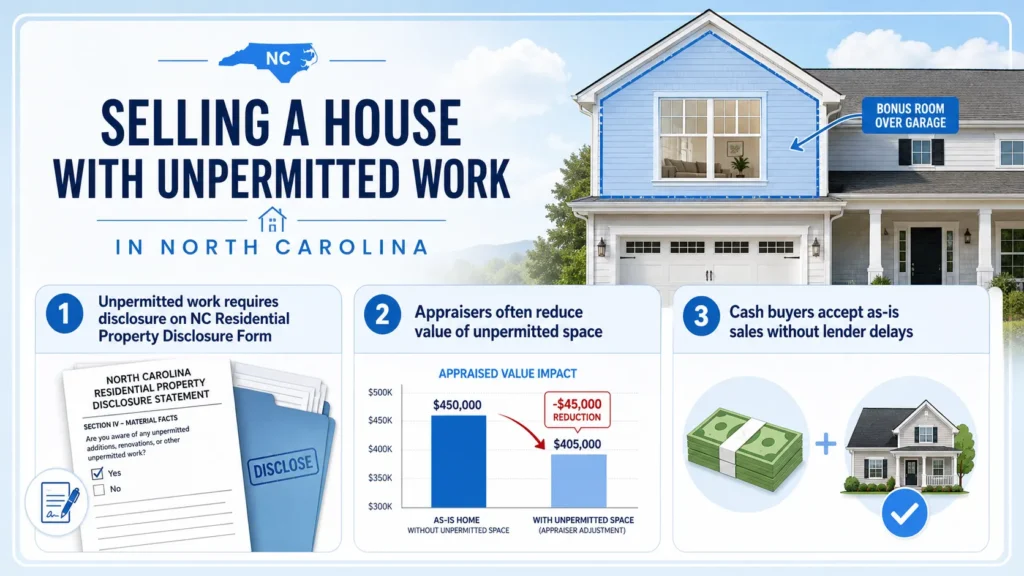
The form gives you three ways to answer each question:
| Answer | What it means | How buyers usually read it |
| Yes | The condition exists, based on what you know | Honest flag they can price in |
| No | The condition does not exist, to your knowledge | A clean statement they rely on |
| No Representation | You are not taking a position either way | An unknown worth investigating further |
No Representation does not magically hide problems. Cautious buyers and their agents often dig deeper when they see it. Marking No when you know about unpermitted work can lead to misrepresentation claims later.
The North Carolina Residential Property Disclosure Act in Chapter 47E explains when sellers must provide this statement. Brokers also have duties around material facts they know about a property. Your agent may need to mention unpermitted work regardless of which box you check.
Honest disclosure usually helps in practical ways:
- Buyers adjust their offer instead of feeling blindsided before closing
- Fewer last-minute renegotiations or cancelled contracts
- Lower legal risk if problems surface after the sale
For a deeper walk-through of each section, see our guide to the North Carolina seller disclosure form. Disputes depend heavily on facts and contracts. When in doubt, talk with a North Carolina real estate attorney.
How buyers, appraisers, and lenders in NC react to unpermitted work
Imagine closing is set for next Friday and boxes are half-packed. Then the appraisal notes that finished space appears unpermitted and will not count fully. Suddenly the lender adds conditions and the buyer wants credits.
Unpermitted work often becomes a three-way tug-of-war over risk and cost. Each party reacts differently. Understanding their concerns helps you plan ahead.
| Party | Typical reaction to unpermitted work |
| Buyers | Ask for a discount, demand permits before closing, or walk away |
| Appraisers | List the space separately and give it less value than permitted area |
| Lenders | Request permit records, require repairs, or decline the loan |
| Insurers | Ask for documentation or refuse to bind certain coverage |
Appraisers often base comparisons on homes without similar unpermitted features. That does not make the space worthless to a buyer. It simply means lenders may finance mainly the fully permitted portions.
Along the Wilmington coast, scrutiny tends to be sharper for certain features:
- Enclosed ground-level spaces under elevated homes
- Large ocean-facing decks exposed to hurricane winds
- Rooms carved out of once-open carports
A cash buyer changes part of that picture. No mortgage underwriter decides whether a room counts in official square footage. The buyer simply estimates repair or legalization costs and decides whether the as-is numbers work.
Timing also changes with a cash buyer. There is no appraisal contingency waiting to flag the bonus room days before closing. Once title work is ready, the sale can move forward without a lender’s last-minute conditions or repair demands.
Your options in North Carolina: permit it, fix it, or sell as-is
Picture the moment a contractor confirms your downstairs room is unpermitted. You face three mental buttons. Call the county, call contractors, or call a buyer willing to purchase as-is.
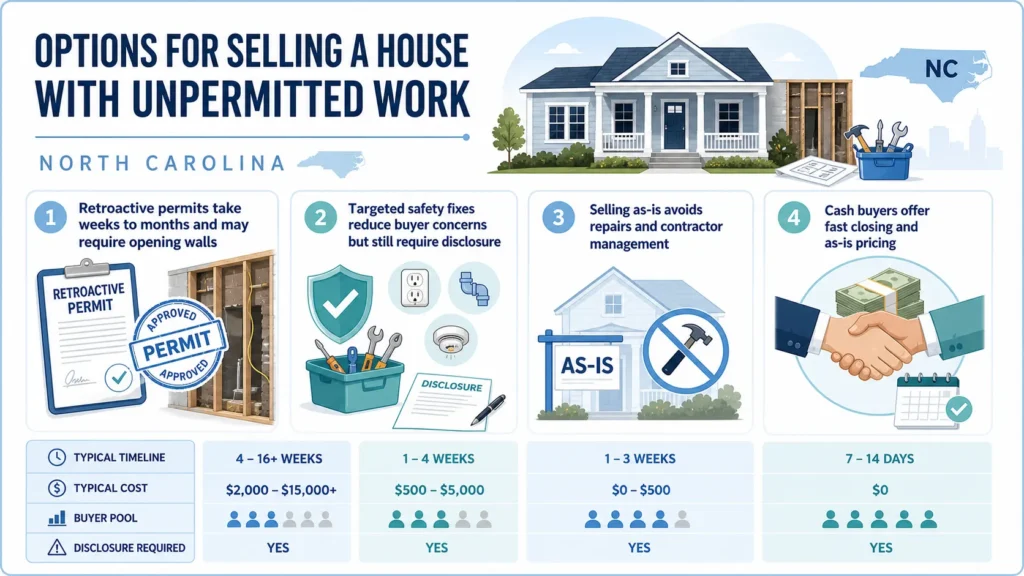
Each path carries different costs, timelines, and stress levels. There is no single right answer for every seller. The table below compares them side by side.
| Option | Upsides | Downsides |
| Retroactive permit | Safer home, fewer buyer and lender questions | Takes weeks or months; inspectors may open walls; unknown costs |
| Targeted safety fixes | Removes the scariest issues for buyers | Still requires full disclosure; work stays unpermitted |
| Sell as-is | No permits, repairs, or contractor management | Offer reflects condition and the buyer’s future work |
A retroactive permit usually follows a predictable flow:
- Describe the existing work to the local building office
- Apply for a permit covering that scope of work
- Open walls, ceilings, or decking for inspection if required
- Make required corrections, then pass re-inspection to close the permit
Targeted fixes might include removing sketchy DIY wiring or demolishing an unsafe deck. Some sellers turn a questionable bedroom back into storage space. Remember, tearing something out the week before listing does not erase your disclosure duty.
With an as-is sale, net proceeds matter most. A financed buyer may offer more on paper, but subtract these costs first:
- Permit fees, plans, and contractor bids
- Extra mortgage payments, taxes, and insurance while you wait
- Credits buyers request after their inspections
Whichever route you choose, get the building office’s answers in writing when possible. Written notes help your agent, attorney, and buyer stay aligned. They also make your disclosure answers easier to support later.
Your situation often points toward the best path. Owners with savings and time may retro-permit, while inherited, foreclosure, or relocation sellers often choose as-is. Families dealing with shared ownership should also read our guide to heir property in North Carolina.
Step-by-step: what to do if you discover unpermitted work before listing
Imagine your photographer is booked for next week and boxes fill the garage. Then a contractor casually mentions the work needed a permit. Should you slam the brakes or keep going?
Follow this simple plan, even when your brain feels scrambled:
- Check permit records. New Hanover County offers building safety and permitting information and local contacts who can confirm what is on file.
- Inventory suspicious projects. Walk the house like a picky buyer and note structural, electrical, plumbing, or below-flood changes.
- Talk to a local pro. Ask an agent, attorney, or as-is buyer whether this is minor or a deal-breaker.
- Choose your path. Pick retro-permitting, targeted fixes, or an as-is sale based on time and budget.
- Align your disclosure. Make sure the form reflects exactly what you now know.
- Set buyer expectations early. Use plain listing language that names the room and says pricing reflects it.
Different professionals help at different moments. Calling them early often prevents much bigger surprises later. Here is who to contact and when:
- A North Carolina real estate attorney for large additions, structural changes, or past disclosures that may be inaccurate
- A licensed contractor or engineer for sagging decks, overloaded panels, DIY plumbing, or cracked supports
- The building department to learn whether permits were required and whether retroactive permits are possible
You do not need to walk into the building office with a dramatic confession. Explain calmly that you bought a home with existing work and want to understand your options. That keeps the conversation focused on information gathering.
Hidden moisture often accompanies DIY lower-level work in coastal homes. Our article on crawl space moisture problems in NC explains what inspectors look for. A no-pressure as-is offer can also show your walk-away number before you open walls.
Wilmington and coastal NC quirks: why unpermitted work shows up so often
Think back to a storm weekend years ago when a hurricane chewed up your deck. A neighbor’s handyman fixed it and maybe enclosed the space underneath. Everyone moved on, until an agent now says it was never inspected.
Across New Hanover, Brunswick, and Pender counties, these projects appear constantly:
- Ground-level enclosures that started as storage and became full hangout rooms
- DIY sunrooms or Carolina rooms added to the back of ranch homes
- Bonus rooms over garages that were once open attic space
- Sheds and outbuildings with HVAC, plumbing, and wiring added over time
Coastal homes face extra layers of rules compared with inland properties. Flood zones, wind exposure, and coastal construction standards affect decks, stairs, and lower-level enclosures. New Hanover County’s planning and land use resources cover local development standards and floodplain considerations.
Because storms are part of life here, a lot of work happened between hurricane seasons without permits. The second or third owner often discovers it. Inspectors tend to focus hardest on structural safety and anything near flood-prone levels.
Questions coastal inspectors and buyers commonly raise include:
- Is the lower-level enclosure built with flood-resistant materials and proper openings?
- Are deck ledgers, posts, and connectors rated for hurricane-force winds?
- Was electrical service below flood elevation installed and inspected correctly?
Flood-zone status adds another layer for buyers and insurers. Our guides on Cape Fear flood zones and selling a house in a flood zone in North Carolina explain those rules. Together, they help you anticipate questions about lower-level enclosures.
If your downstairs room or deck grew a little after every storm, you are not alone. Local as-is buyers see these quirks every week. Their question is simply what it will cost to make the work safe and marketable later.
Why a local cash buyer can make selling with unpermitted work easier
By now you may be juggling permits, disclosure forms, contractor quotes, and a ticking clock. None of that is how you hoped to spend your evenings. Every friction point grows larger when unpermitted work is involved.
A traditional listing usually means repairs, showings, inspections, appraisals, and renegotiations. Any of those steps can flag unpermitted work late in the process. Deals sometimes collapse days before closing.
A local cash buyer who understands Wilmington sidesteps much of that friction:
- No lender to convince, so no underwriter checklist delays closing
- As-is pricing for downstairs rooms, repaired decks, and DIY sunrooms
- No showings or picture-perfect staging required
- One walk-through on your schedule, followed by a straightforward offer
What matters most is your net, meaning the check you actually take home. Compare a higher list price minus commissions, repairs, and carrying costs against a simpler as-is offer. Many sellers find the easier path makes more sense.
If you are in Wilmington or nearby coastal North Carolina, reach out to ILM Home Offer for a no-pressure walk-through and cash offer. You will see what selling as-is looks like in real numbers. Then choose the path that lets you breathe easier and finally put this chapter behind you.
FAQs: Selling a house with unpermitted work in North Carolina
Can you sell a house with unpermitted work in North Carolina?
Yes. Trade-offs usually appear in price, timing, and buyer type. Financed buyers may want permits or repairs, while cash buyers often accept the work as-is when disclosure is honest.
Do you have to disclose unpermitted work in North Carolina?
You must answer the disclosure form honestly based on what you know. No Representation does not hide issues. If you are unsure how to answer, consult a North Carolina real estate attorney.
Will I get fined for unpermitted work in NC?
Penalties vary by jurisdiction and the work’s scope. Many homeowners resolve issues through retroactive permits or corrections rather than charges. Ask your local building department or attorney about your situation.
Will unpermitted square footage count in the appraisal?
Often not fully. Appraisers typically list unpermitted space separately or assign reduced value. Lenders may only finance permitted living area, which is one reason cash buyers can move more easily.
What if a previous owner did the unpermitted work?
You still must answer the disclosure form truthfully based on what you now know. Many sellers inherit these issues from prior owners. Serious disputes are best handled with a real estate attorney.
Do I need to repair or permit everything before selling to a cash buyer?
No. As-is cash buyers generally factor unpermitted rooms, aging decks, and old electrical into their offer. You may still make repairs if you want, but it is not required.