


Picture that half-finished disclosure packet on your Wilmington kitchen table, pen in hand, questions about leaks, mold, and flood damage staring back at you. You may wonder whether being honest will scare buyers away.
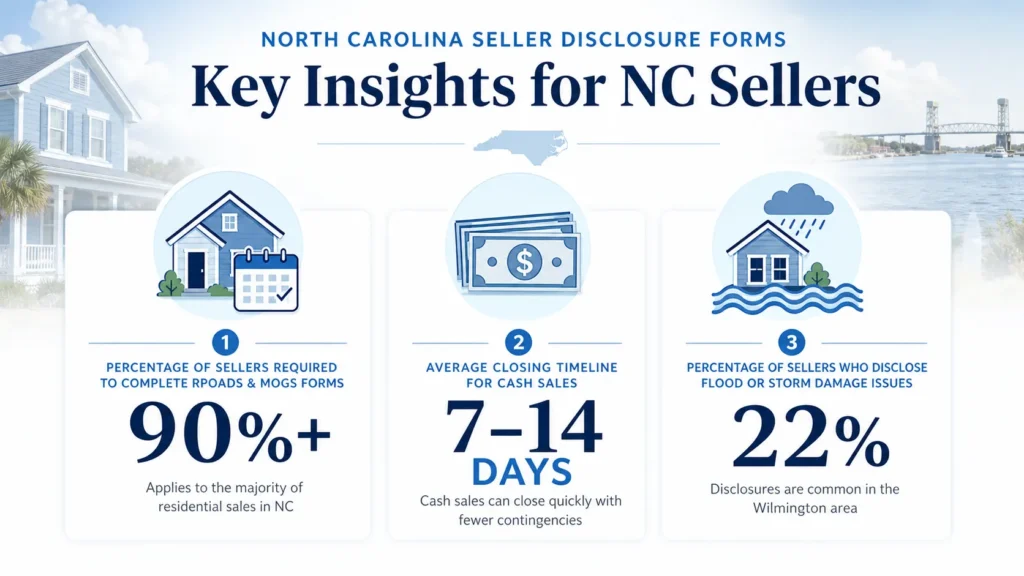
Most North Carolina sellers must deal with two forms: the Residential Property and Owners’ Association Disclosure Statement (RPOADS) and the separate Mineral and Oil and Gas Rights Disclosure (MOGS). Together, these make up the North Carolina seller disclosure form, and they apply to most residential sales across the state, including Wilmington.
This guide walks through what these forms are, who generally has to use them, what is actually on them, and how they affect your sale. We keep things practical and grounded in how deals really work along the coast. This article is general information, not legal advice — talk with a North Carolina real estate attorney for questions about your situation.
What Is the North Carolina Seller Disclosure Form (RPOADS & MOGS)?
North Carolina uses two forms for most residential sales: RPOADS and the separate mineral, oil, and gas rights statement. Both stem from the Residential Property Disclosure Act, found in Chapter 47E of the North Carolina General Statutes. An NCREC bulletin confirms most sellers must provide both forms as part of North Carolina seller disclosure requirements.
A central concept is the material fact — anything about the property’s condition or legal status that a reasonable buyer would want to know. On RPOADS, answers are Yes, No, or No Representation; the last option means you aren’t stating anything either way, not that you’re excused from disclosing known issues.
- The mineral rights side is required separately under G.S. 47E-4.1.
- In Wilmington, RPOADS is often where flood history, hurricane repairs, and crawlspace moisture get documented.
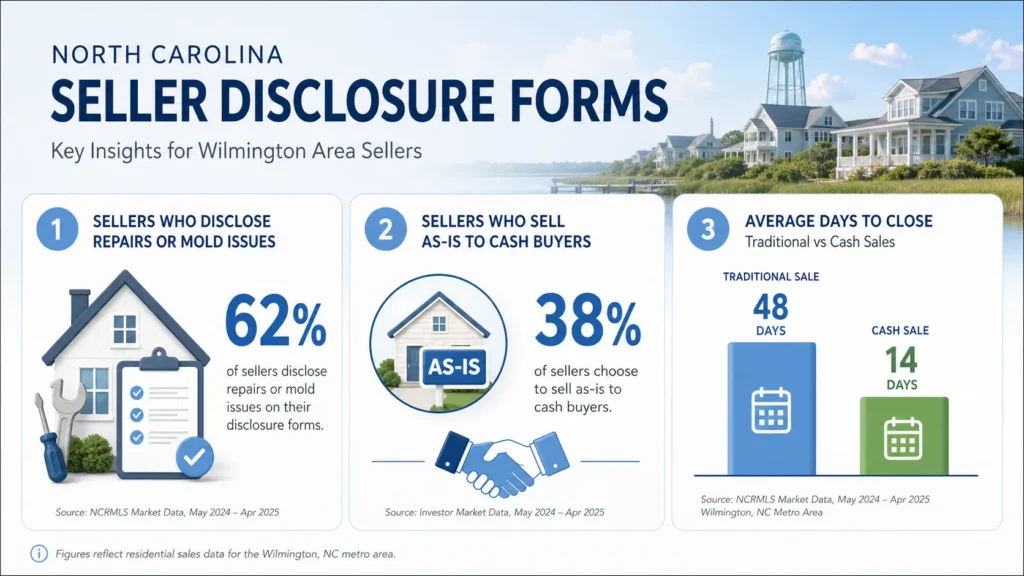
- Whether you list traditionally or sell to a cash buyer, these disclosure duties still apply.
Buyers use this information to price the property with eyes open instead of discovering problems halfway through the deal. Whether you list publicly or sell off-market, the same honesty standard applies to what you know and put in writing. If you’re considering going it alone, see this guide on how to sell a house by owner in NC.
Who Has to Fill Out NC Disclosure Forms—and Who’s Exempt?
Most residential sellers should expect to complete both forms unless a specific legal exemption applies. The exact categories should be confirmed against current statute and NCREC guidance before anyone relies on a summary.
| Seller Type | General Expectation |
| Owner-occupants and landlords | Typical residential sales generally require both forms |
| Court-supervised transfers | Foreclosure or tax-sale situations may be treated differently and need legal review |
| Estate or fiduciary transfers | An executor or fiduciary sale may follow different rules than a normal transfer |
| Certain family transfers | Exemption depends on the exact transfer, not just the relationship |
Even an exempt seller generally can’t hide known major issues like structural damage, a failing septic system, or chronic flooding. There may also be a statutory path involving a licensed inspection report in place of the standard form, though current conditions and limits should be verified directly with an attorney or NCREC before relying on it.
This is where real-life gray areas show up. An inherited beach cottage in probate, a bank-owned foreclosure, or a divorce buyout are exactly the situations where a North Carolina real estate attorney should review your specific facts. If you’re settling an estate, this guide on selling a house in probate in NC offers a broader view, and if foreclosure is part of the picture, see selling a house in foreclosure in NC.
What’s Actually on the North Carolina Seller Disclosure Form?
RPOADS is prescribed by the North Carolina Real Estate Commission and available as an official Residential Property and Owners’ Association Disclosure Statement PDF. Before filling it out, gather past inspection reports, repair invoices, permits, HOA documents, and flood insurance paperwork so you aren’t guessing about dates or details.
Work through the form section by section and stick to what you actually know. If you genuinely don’t know an answer, it’s better to say so than to guess, and use the comment lines to briefly explain any issue you mark, even one you’ve already fixed.
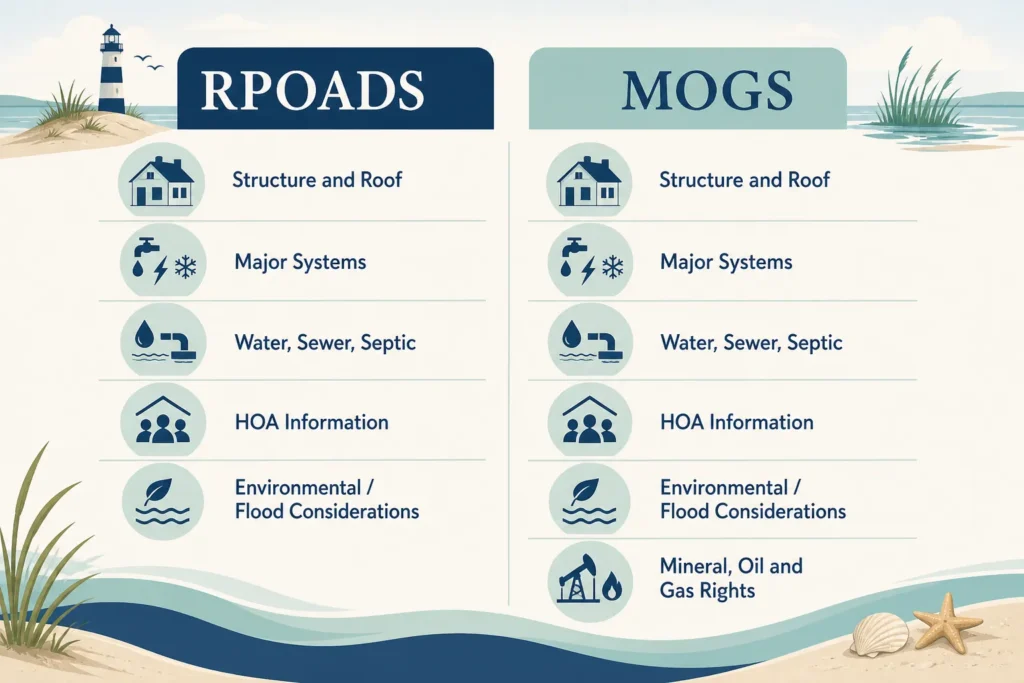
| Section | What It Covers | Wilmington Angle |
| Structure, roof, foundation | Roof age, foundation cracks, termite/pest damage, decks and permits | Roof leaks repaired after Hurricane Florence |
| HVAC & electrical | System age, past failures, outdated wiring | Humid coastal climate stresses HVAC |
| Plumbing, water, septic | City vs. well/sewer, pipe issues, septic permits and tank/bedroom match | Septic mismatches and high water tables |
| Fixtures & appliances | What conveys with the property | Prevents walkthrough disputes |
| Land use & access | Easements, shared driveways, drainage | Common in older neighborhoods |
| HOA & covenants | Dues, special assessments, violations | Beach condos with big-ticket projects |
If water or moisture is a concern, see guides on selling a house with water damage in NC, selling a house with mold in NC, or selling a house with a failed septic system in NC.
When Do You Have to Give NC Disclosures to the Buyer?
Under North Carolina General Statute 47E-5, sellers must deliver disclosures no later than when the buyer makes an offer. Buyers should see RPOADS and MOGS before or at the moment they decide what to offer.
- MLS-listed sales: forms are typically completed up front and shared during the offer process.
- Direct cash sales: forms can be delivered with the initial offer packet or signed alongside the contract.
If disclosure is delivered late, the buyer may gain rescission rights to cancel without penalty — even under an as-is contract, since as-is doesn’t waive Chapter 47E timing rules. A buyer might sign a contract on your Wilmington bungalow, then receive late disclosures, spot something they dislike, and use that rescission right to walk away from a deal you thought was solid.
Putting off disclosure until the last minute simply creates extra risk with little upside. For more on timing, see how long it takes to close on a house in North Carolina and how long it takes to sell a house in NC.
Common Disclosure Mistakes—and What Happens If You Leave Something Out
Hiding a known problem is usually riskier than disclosing it. Common mistakes include:
- Checking “Yes” but leaving the comment line blank.
- Guessing “No” instead of admitting uncertainty.
- Leaving out repaired issues like past leaks or septic work.
- Downplaying chronic problems such as recurring leaks or long-running septic issues.
- Softening the truth about a recurring problem to make the property look better on paper.
- Failing to update the disclosure when a storm, burst pipe, or new inspection turns up an issue before closing.
Failing to disclose a known material fact can lead buyers to cancel under contingencies, demand repair credits, or in serious cases, sue for misrepresentation after closing. A seller who knows about chronic crawlspace moisture and past mold treatment but leaves it off the form risks legal bills and months of stress after the buyer discovers it post-closing.
Intentional concealment tends to land far worse than an honest oversight that’s promptly corrected. Being upfront early is your best protection, and serious buyers, including local cash buyers, would rather see the full story on paper. See how this plays out with a pending house sale in North Carolina, contingencies in a house sale in NC, or selling a fire-damaged house in NC.
Coastal & Wilmington-Specific Disclosure Issues You Can’t Ignore
Buyers near Wilmington, Carolina Beach, and Kure Beach pay close attention to a few hot-button areas:
- Flood and storm history: flood zone status, prior water intrusion, insurance claims, FEMA/SBA assistance, elevation certificates.
- Hurricane repairs: roof, siding, window, and deck damage from past storms.
- Crawlspace moisture and mold: chronic dampness, prior remediation, dehumidifiers or drainage fixes.
- Septic and well issues: systems that don’t match bedroom count, high water tables affecting drain fields.
- HOA and rentals: whether short-term rentals are allowed, and any storm-related special assessments or restrictions that matter to investment buyers.
Homes that lay these issues out plainly tend to move more smoothly than ones where surprises surface during inspection or underwriting. Noise from the port, air traffic near military bases, and other location quirks can also matter to buyers weighing a coastal purchase. If flooding or water damage is your biggest worry, you can go deeper with this guide on selling a house with water damage in NC.
Landlords, Tenants & As-Is Sales: How NC Disclosures Still Apply
Marking a contract as-is does not erase your disclosure duties, even on a rental you plan to sell without repairs. Buyers still want to know about lease terms, rent status, and repair history.
- Lease and rent status: written lease terms, rent amount, and any nonpayment history.
- Maintenance history: repeated plumbing, HVAC, or electrical issues, and known code concerns.
- Landlord knowledge: maintenance records and tenant communications are your best guide when you haven’t lived there yourself.
“No Representation” is fine for things you genuinely don’t know, but it shouldn’t sweep away years of documented repair requests, such as a UNCW-area rental with a long history of slow drains and mold complaints. Trying to repair, clean, and show a rental while tenants remain in place also adds stress on top of vacancy costs, holding costs, and last-minute repair credits. If juggling tenants and showings feels like too much, see options for a hoarder house in NC or review typical closing costs for sellers in NC.
Quick-Reference Checklist & Making Disclosures Less Stressful
Keep this fridge-worthy summary next to your RPOADS and MOGS forms:
| Rule | What It Means |
| Most sellers need both forms | RPOADS and MOGS, unless a specific exemption applies |
| Deliver by offer time | Late delivery can trigger buyer rescission rights |
| Disclose repaired issues | Past leaks, septic work, and mold remediation still belong on the form |
| Update if things change | New material issues found before closing may need to be added to the form |
| As-is doesn’t cancel duties | You still must deal honestly with known material facts |
| Coastal issues matter | Flood, storm, and septic history draw buyer and insurer scrutiny |
| Landlords disclose records | Maintenance logs and tenant communications guide honest answers |
| Buyers still inspect | The form is a starting point, not a substitute for due diligence |
A local cash buyer like ILM Home Offer looks at a long disclosure list differently — without a lender waiting on underwriting, we price known issues like flood history, mold, or septic quirks into the offer instead of demanding repairs first. You are not scrambling to redo forms at the last minute or chasing tenants for a perfect showing while juggling repairs and access.
We can often close in 7–14 days, you choose the closing date, and ILM covers closing costs and cleanup. If disclosures, repairs, or tenant issues feel overwhelming, reviewing the bigger financial picture in this guide to the cost of selling a house in NC can help. You can also get a cash offer on your Wilmington or southeastern NC home with no fees, no repairs, and no commissions.
FAQs: North Carolina Seller Disclosure Forms
Do I need to disclose all known issues, even minor ones?
Yes. North Carolina requires disclosure of known material facts, and what feels minor to you may matter to a buyer. Being upfront usually prevents surprises during inspections or after closing.
What’s the difference between RPOADS and MOGS?
RPOADS covers physical condition, systems, HOA details, and flood or environmental history; the RPOADS PDF is published by NCREC. MOGS separately addresses mineral, oil, and gas rights under G.S. 47E-4.1.
Can I defer disclosure for a probate or foreclosure sale?
Some estate, fiduciary, or foreclosure transfers may qualify for exemptions, but that doesn’t erase duties around known material facts. Consult a North Carolina real estate attorney about your exact situation.
Where can I download the RPOADS PDF?
Download the current form directly from the North Carolina Real Estate Commission website. Always confirm you’re using the latest version rather than an outdated copy found elsewhere online, since forms are periodically updated.
How should I prepare before listing?
Gather repair invoices, inspection reports, HOA documents, and flood insurance paperwork ahead of time. This makes filling out RPOADS and MOGS more like copying notes than recalling years of history.
Can I sell as-is to a cash buyer if my disclosure lists problems?
Yes. ILM Home Offer routinely buys homes with water damage, mold, septic issues, or old roofs disclosed, and prices those factors into the cash offer rather than requiring repairs first.
Will flood damage or a failed septic system scare off a cash buyer?
These issues may deter financed buyers and lenders, but experienced local cash buyers expect them in coastal NC and typically adjust the offer, and skip requiring repairs, rather than walking away.