

Coastal North Carolina’s high humidity, frequent tropical storms, and aging housing stock make crawl space moisture one of the most common problems Wilmington homeowners face on inspection day. Whether you are seeing musty odors drifting through the house, hardwood floors beginning to cup, or a buyer’s report flagging elevated moisture and mold — understanding what is happening under your home is the critical first step before deciding how to respond.
Ignoring early signs or hoping conditions stay stable rarely works in our coastal climate, where moisture problems tend to compound through each successive rain season without targeted intervention. Acting early, even with basic prevention steps, consistently costs far less than addressing a problem that has been developing for years.
Our blog covers what crawl space moisture looks like in our climate, what drives it, how it damages structure and health, how to fix it with rough cost ranges, practical prevention steps for coastal homeowners, and when selling as-is to a cash buyer may leave more money in your pocket than pursuing a full repair-and-list strategy.
What Crawl Space Moisture Problems Look Like in Wilmington
A crawl space moisture problem is not simply post-storm humidity that dissipates in a couple of dry days. It is persistent dampness — standing water, saturated soil, mold colonies on joists, or condensation on ductwork — that stays present long after the weather clears.
We are ILM Home Offer, a local cash home buyer in Wilmington and southeastern NC. For nine years we have walked older coastal houses with moisture damage, active mold, and significant wood rot — assessing what those conditions mean in real repair dollars and helping sellers find the path that actually makes financial sense for their specific situation, whether that is fixing and listing or selling the house clean and as-is without funding a large project first.
According to the CDC’s guidance on indoor mold and dampness, persistent building dampness is a recognized health concern that should be addressed, not dismissed as a regional humidity issue. A crawl space that smells heavily musty even during a dry stretch of weather is signaling a specific, diagnosable problem — not normal coastal conditions.
Warning signs inside the living space include:
● A musty or earthy smell that lingers well after rain or humid weather passes
● Hardwood floors cupping, buckling, or developing soft spots near exterior walls
● Doors sticking or falling noticeably out of square over weeks or months
● Allergy, sinus, or respiratory symptoms that consistently worsen at home
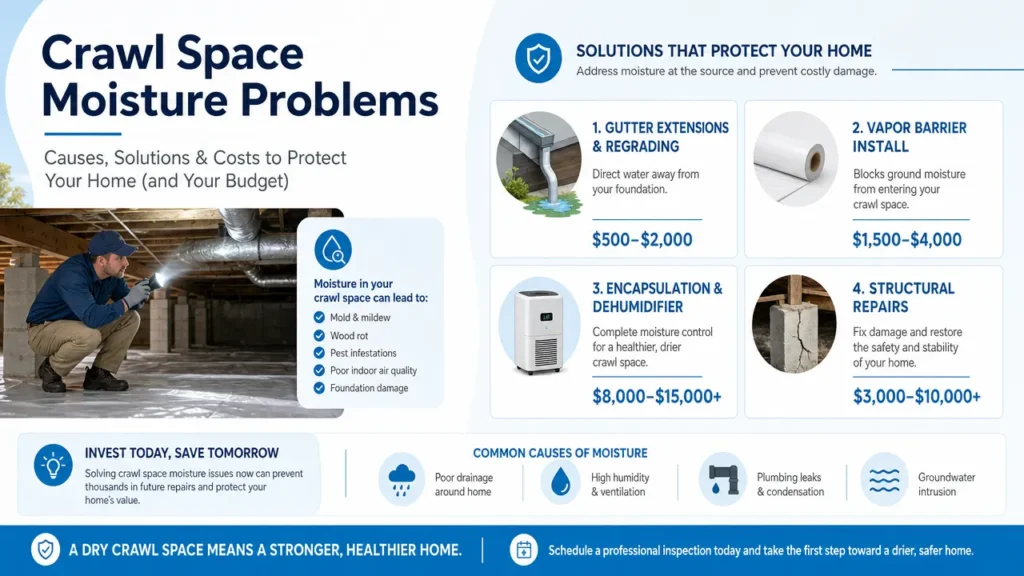
Warning signs visible from under the house include:
● Standing water, mud, or soil that stays soft and dark for days after rain
● Mold or mildew patches on joists, beams, sill plates, or subfloor surfaces
● Wet, sagging, or fallen insulation hanging from between floor joists
● Condensation dripping from HVAC ducts or supply water lines
● White chalky mineral deposits on block walls indicating past water intrusion
● Rust forming on metal joist hangers, straps, or other hardware
Common Causes of Crawl Space Moisture in Coastal NC
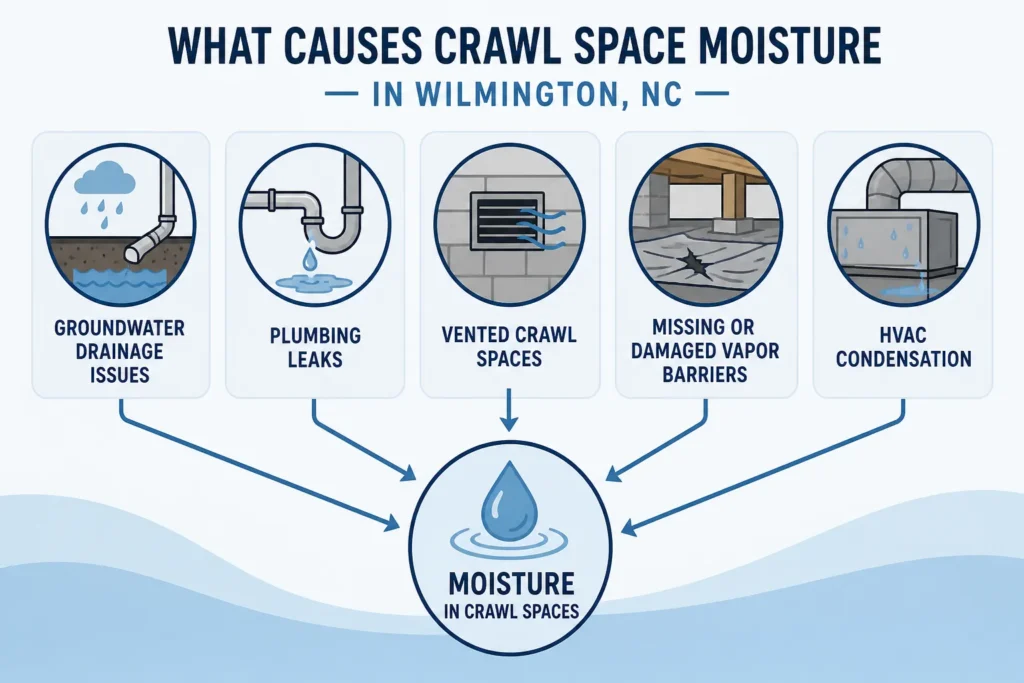
Crawl space moisture in Wilmington rarely comes from one source. It typically results from a combination of site conditions, construction era, and deferred maintenance working together over years to keep the space chronically wet. Understanding root causes is essential because treating only visible symptoms — spraying mold without correcting drainage or vapor control — produces the same recurring problem at higher cost each time. A thorough diagnosis of all contributing factors is the only way to achieve lasting results.
| Cause | What Happens |
| Poor drainage or negative grading | Rainwater pools at the foundation and seeps into the crawl space |
| Vented crawl space design | Warm, humid outdoor air enters and condenses on cooler wood, pipes, and ducts |
| Bare dirt floors or damaged vapor barrier | Ground moisture evaporates directly into crawl space air without any barrier |
| Plumbing leaks above the crawl space | Slow drips keep localized areas constantly wet, accelerating mold growth and rot |
| HVAC condensation or disconnected ducts | Uninsulated or leaking duct lines drip persistently onto insulation and wood |
Older pier-and-beam homes with vented crawl spaces are particularly vulnerable in our coastal climate because they were designed for an era with lower regional humidity expectations. When you combine summer humidity levels consistently above 80 percent, flat lots that drain slowly after major rain events, and original vapor barriers that are torn, missing, or partially installed, the crawl space never fully dries between weather events — making the problem self-reinforcing over time.
How Crawl Space Moisture Damages Structure, Health, and Home Value
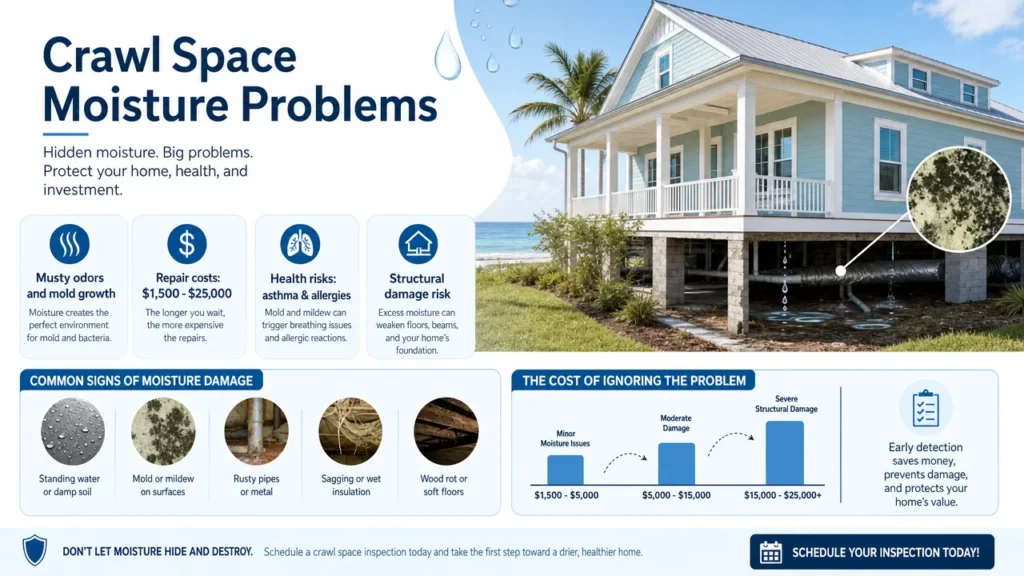
Long-term moisture exposure can weaken a home’s structure progressively and silently. Over time, joists and sill plates absorb dampness, soften, and eventually rot. This damage can appear as:
· Bouncy or soft floors
· Uneven surfaces
· Cracks in interior walls
· Trim pulling away from the framing
The EPA’s guidance on mold in homes is clear: permanently correcting the moisture source is the only effective long-term solution. Treating visible mold without addressing the underlying moisture problem is only temporary and can lead to repeated remediation costs as structural members continue to weaken.
Health Risks from Crawl Space Moisture
Moisture problems can also affect indoor air quality. Through the stack effect, warm air rises through floor gaps, potentially carrying mold spores and moisture into living spaces.
The American Lung Association links exposure to indoor mold and dampness with:
· Worsened asthma symptoms
· Respiratory infections
· Allergy symptoms
These risks can be more significant for children, older adults, and people with existing breathing conditions.
Impact on Home Sales and Value
During a financed sale, crawl space moisture problems can become especially costly during inspection and underwriting. Common consequences include:
· Inspectors flagging elevated moisture readings or organic growth
· Buyers submitting repair demands or backing out of the deal
· Lenders requiring documented professional remediation before funding
· Sellers facing unexpected repair costs and delays while under contract
In some cases, sellers discover that paying for full remediation does not produce a meaningfully better net outcome than accepting a lower offer and selling without completing the repairs. This is particularly true when the moisture problem has already caused significant structural damage or requires an expensive, time-consuming repair.
DIY Checks vs. Calling a Crawl Space Pro
A careful hatch-level look can give you valuable early information before paying for a professional inspection. Wear gloves and a basic dust mask, bring a strong flashlight, and stay near the opening — do not crawl deep into a moldy or poorly ventilated space without full protective gear and proper respiratory protection. Take photos of anything that looks unusual so you have a baseline for comparison when talking with contractors or a cash buyer who will walk the space and give you a real number.
From the hatch, look for:
● Standing water or soil that stays persistently soft and dark
● Wet, torn, or bunched-up vapor barrier plastic on the ground
● Sagging or fallen insulation dropping from between floor joists
● Dark mold growth or heavy staining on visible wood surfaces
● Condensation or active dripping from ductwork and water pipes
● A strong musty odor at the opening that does not clear with ventilation
Call a licensed contractor when water returns after every storm, mold is widespread across multiple sections, floors feel bouncy or visibly uneven, or a musty smell persists through dry weather. You can also review our guide on signs your house has foundation problems to understand how moisture damage often overlaps with broader structural warning signs.
A professional can measure wood moisture content precisely, assess the extent of structural damage versus surface-level issues, and design a solution stack — drainage, vapor barrier, encapsulation, or mechanical dehumidification — matched to your specific crawl space conditions.
Fixing Crawl Space Moisture: Solutions and Rough Costs
The Building Science Corporation recommends sealed and conditioned crawl spaces over traditional vented designs in humid southeastern climates, citing decades of performance data showing that vented designs in our region consistently underperform at moisture management. In practice, effective remediation in Wilmington usually means combining solutions — starting with exterior drainage and working toward vapor control and air management for more complete long-term results.
| Solution | What It Does | Rough NC Cost (2026) |
| Gutter extensions and regrading | Redirects surface water and roof runoff away from the foundation perimeter | $500 – $2,000 |
| Vapor barrier install or repair | Blocks ground moisture from evaporating into crawl space air | $1,500 – $4,000 |
| Interior drain and sump pump | Actively removes groundwater accumulation from under the house | $2,500 – $6,000 |
| Full encapsulation with dehumidifier | Seals and conditions the entire crawl space environment for long-term control | $8,000 – $15,000+ |
These are ballpark ranges for the Wilmington and southeastern NC market, not quotes. Actual costs vary based on crawl space size, access difficulty, the number of systems required, and local contractor pricing. If rot has reached sill plates, joists, or subfloor, structural wood repair typically adds $3,000–$10,000 or more on top of moisture control work — meaning a full-scope remediation project on an older Wilmington home can easily run $15,000–$25,000 total before other sale preparation costs.
Prevention Tips for Wilmington and Coastal NC Homeowners
The most effective prevention strategy is to control how water approaches and enters the foundation before it becomes a crawl space moisture problem. Focus on these basic maintenance steps:
· Keep gutters clear and clean them after each storm season.
· Extend downspouts at least four feet away from the foundation wall.
· Make sure soil around the entire perimeter slopes away from the house.
· Fill low-lying areas near the foundation where water collects after rain.
· Avoid irrigation heads that spray directly against siding or saturate soil along the foundation.
These maintenance habits cost relatively little but can eliminate some of the most consistent moisture entry paths before they lead to crawl space damage.
Check the Crawl Space After Major Weather Events
After hurricanes, nor’easters, or multi-day rain systems, inspect the crawl space hatch for signs of:
· New standing water
· Changes or damage to the vapor barrier
· Other signs of moisture intrusion
A small issue caught and addressed within days can be a straightforward fix. Left unchecked for several months, the same problem can develop into structural rot requiring expensive framing repairs.
If you plan to hold the property for several more years, consider longer-term improvements such as:
· Upgrading the vapor barrier
· Sealing and insulating ductwork
· Scheduling periodic professional moisture inspections
These can be relatively low-cost investments compared with the potential maintenance expenses and impact on the property’s eventual sale price.
Keep Detailed Repair and Inspection Records
Maintain written records of every crawl space repair and inspection, including:
· Contractor invoices and reports
· Inspection records
· System warranties
· Details of completed repairs
Also factor in how property taxes in Wilmington, NC, can accumulate during extended holding periods while repairs are delayed.
A clear maintenance history can help create a smoother transaction with fewer mid-deal surprises, whether you eventually list the property on the open market or sell directly to a cash buyer.
When Selling As-Is Makes More Sense Than Repairing First
Total crawl space remediation, encapsulation, and structural repairs can easily reach $15,000 to $25,000 or more on an older Wilmington home before you factor in carrying costs, agent commissions, closing fees, and the weeks or months required to manage contractors and pass re-inspection.
For sellers already under financial pressure, that total rarely produces a better net outcome than a well-structured as-is sale. Our guide on how to price a house with foundation issues covers how structural and moisture conditions affect market value and what sellers can realistically expect from each approach.
Selling as-is makes the most practical sense when:
● You face foreclosure or serious payment pressure and cannot finance major repairs upfront
● You inherited the property and no one in the family wants to manage a multi-month renovation
● You’re located out of state and coordinating contractors, inspections, and permits remotely is impractical
● The house has multiple major repair needs well beyond the crawl space alone
● A financed buyer’s lender has already conditioned or denied funding based on crawl space findings
With ILM Home Offer there is no lender checklist, no repair contingencies, and no mortgage underwriting timeline to wait on. We inspect the crawl space ourselves, estimate the real cost of addressing moisture, mold, and any structural damage, and build that directly into our cash offer with no mid-sale adjustments or surprises.
We cover all closing costs and typically deliver a written offer within 48 hours of walking the property. For related situations, see our guides on selling a house with mold in NC and selling a home with water damage. There are no commissions, no repair negotiations, and no lender conditions to satisfy before you close on your schedule.
FAQs: Crawl Space Moisture Problems NC
Is some crawl space moisture normal in coastal NC?
Light seasonal dampness after heavy rain is common in our climate. Persistent musty odors, standing water, or mold growth are not normal and require professional assessment. The CDC recognizes persistent indoor dampness as a documented health concern.
How much does crawl space moisture remediation cost in Wilmington?
Vapor barriers and drainage fixes typically run $1,500–$6,000. Full encapsulation with drainage and a dehumidifier often reaches $8,000–$15,000 or more. Structural wood repairs add significant cost on top of moisture control work.
Can I sell my Wilmington house as-is with crawl space mold or high moisture?
Yes, especially to a cash buyer. You must disclose what you know, but cash buyers don’t require lender approval or pre-sale remediation. The full repair cost is factored into the cash offer rather than becoming your pre-close project.
Will crawl space moisture problems kill a financed sale?
They often complicate one significantly. Lenders frequently require documented remediation before funding, placing the full cost and timeline burden squarely on the seller at the most stressful point in the transaction.
Do I need to fix the crawl space before selling to ILM Home Offer?
No. We buy houses as-is throughout Wilmington and southeastern NC. We inspect the crawl space, price the repairs into our cash offer, and handle all remediation after closing — nothing required from you first.
What is the fastest way to check my crawl space before calling anyone?
Use a flashlight from the hatch and look for standing water, torn vapor barrier, fallen insulation, and condensation on ducts. A strong musty odor right at the opening — even without visible water or mold — is itself a meaningful warning sign worth acting on promptly.