
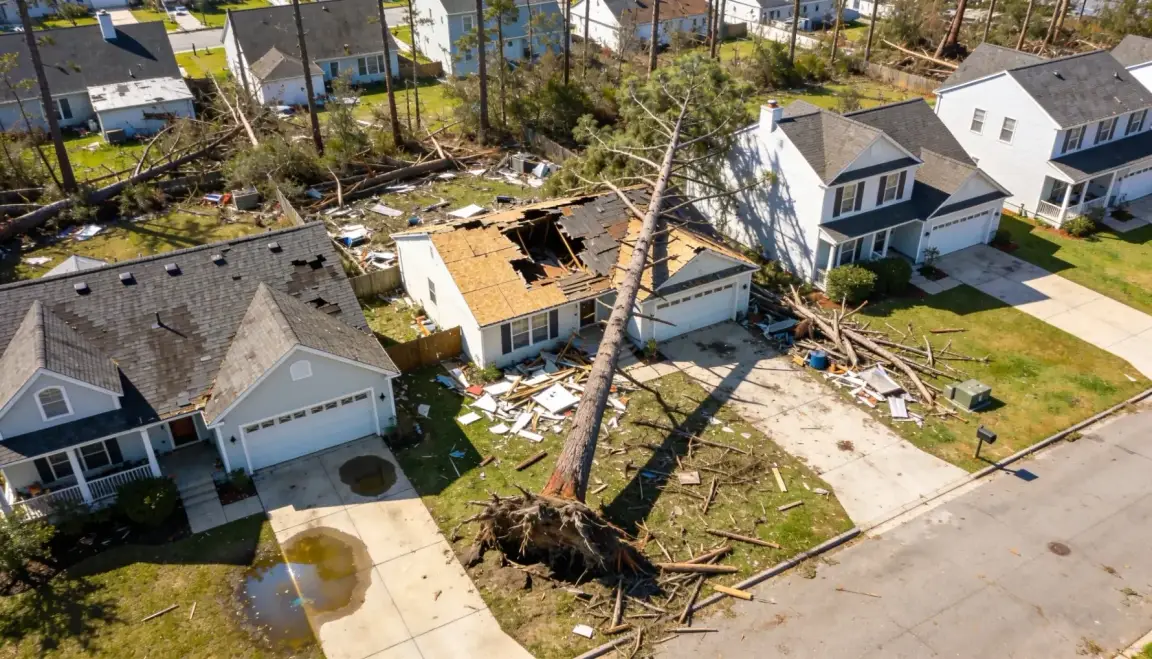
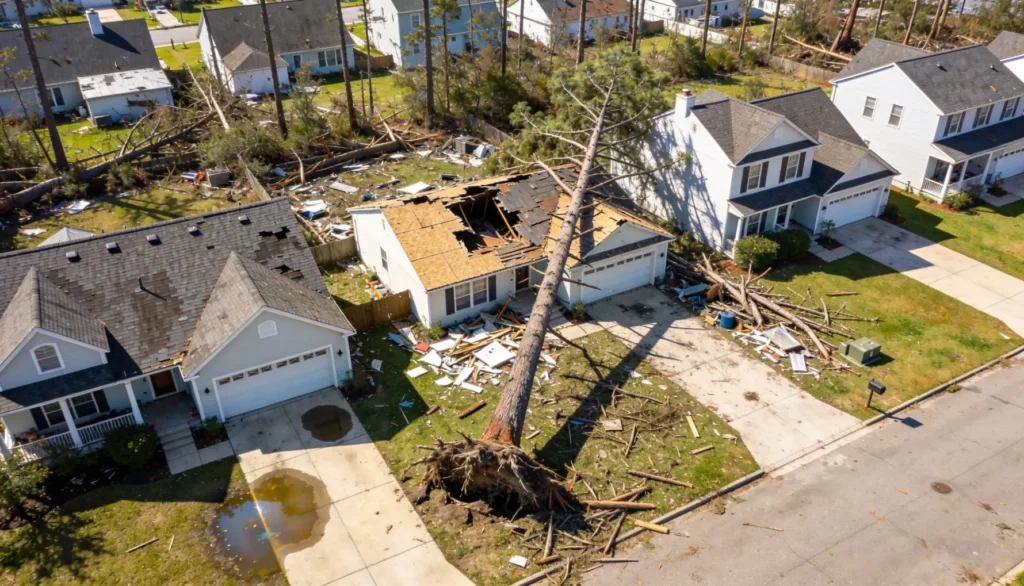
A hurricane damaged house is any home that sustained structural, cosmetic, or systems damage from a hurricane — whether from high winds, wind-driven debris, flooding, or a combination. If you own one in Wilmington, the path forward can feel overwhelming. Between insurance claims, permit requirements, hidden moisture damage, and uncertain repair costs, there are a lot of moving pieces.
This guide covers the types of damage hurricanes cause in coastal North Carolina, how to evaluate a storm-damaged property, how insurance works for wind versus flood, what permits and codes require, how to build a realistic rehab budget, and how financing and closing timelines differ depending on your route.
What Counts as a Hurricane-Damaged House in Wilmington, NC?
A hurricane-damaged house is a property whose damage can be directly traced to a hurricane event — not to normal aging, deferred maintenance, or gradual wear and tear. The distinction matters because insurance, permitting, and resale disclosures treat hurricane-related damage differently from ordinary deterioration.
In Wilmington’s coastal climate, typical hurricane damage patterns include:
- Wind damage: Missing or lifted roof shingles, broken siding, shattered windows, downed trees impacting the structure
- Flood damage: Standing water intrusion in ground-floor rooms, saturated crawlspaces, waterlogged flooring and drywall
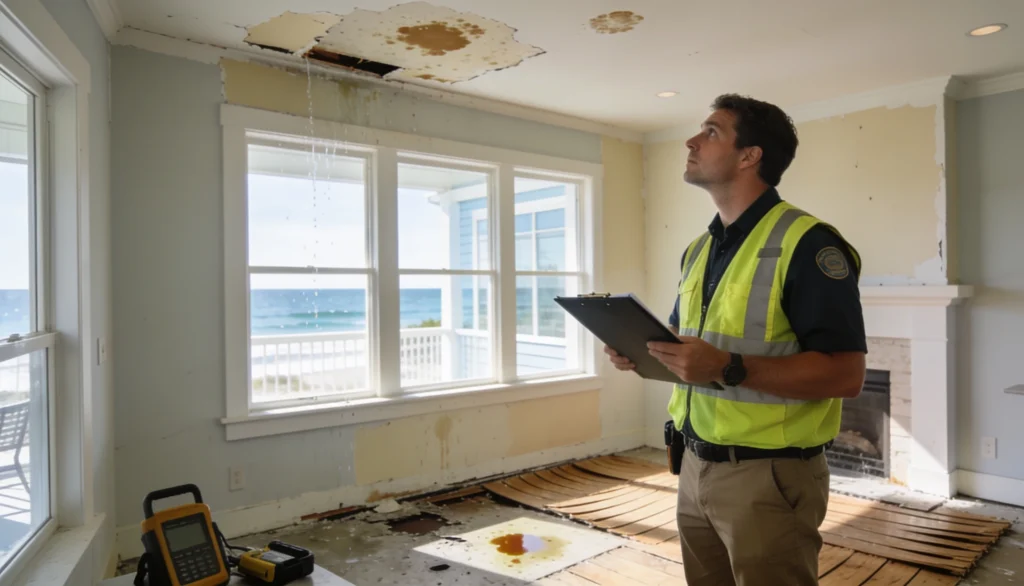
- Wind-driven rain: Water intrusion through damaged roofing or siding, often showing up as ceiling and wall staining days or weeks after the storm
- Combined damage: Many Wilmington homes experience both wind and flood in the same event, which complicates insurance claims
An aging roof or a slow leak is not hurricane damage — unless a specific storm caused or worsened it. That line is exactly where insurance adjusters focus.
How Hurricane Damage Affects Property Values and Rehab Budgets
Hurricane damage typically pushes a property’s market value well below comparable undamaged homes. The gap depends on severity — a patched roof and minor cosmetic issues might trade at a modest discount, while structural compromise, active mold, or flood-damaged mechanicals can cause dramatic value drops. After-repair value (ARV) only holds if the rehab fully addresses every issue.
Major rehab cost drivers for hurricane-damaged homes in coastal NC include roof replacement, structural work, mold remediation, flooring and drywall replacement, and electrical, HVAC, and plumbing repairs. Older coastal construction — common in parts of Wilmington — can trigger required code upgrades during repairs, adding unexpected cost.
The basic framework: purchase price + rehab budget + holding costs vs. expected ARV. Hidden damage — moisture behind walls, compromised subfloor, corroded wiring — routinely expands scope beyond initial estimates. That uncertainty is why some owners decide selling as-is makes more sense than absorbing open-ended rehab risk.
Wilmington saw this firsthand when Hurricane Florence made landfall near Wrightsville Beach on September 14, 2018, temporarily isolating parts of the area with floodwaters. Wilmington sits in one of the most hurricane-exposed corridors on the East Coast.
How to Evaluate a Hurricane-Damaged House in Wilmington
Evaluation starts with safety and works outward — structure to systems to documentation. Skipping steps risks expensive surprises after you have already committed.
1. Safety First
- Confirm utilities are off (or safe) before entering
- Check for structural instability — sagging rooflines, leaning walls, buckled floors
- Look for standing water or active leaks indicating ongoing risk
2. Exterior Walkthrough
- Walk the full perimeter: missing siding, cracked stucco, broken windows, foundation cracks
- Inspect the roofline from the ground: missing shingles, exposed decking, debris impact marks
- Check for downed trees resting against the structure — can cause hidden damage at the contact point
3. Interior Inspection
- Ceilings and upper walls: water staining, bubbling paint, sagging drywall
- Floors: buckling hardwood, warped laminate, soft spots in subfloor
- Doors and windows that no longer open squarely may indicate frame shift
4. Moisture and Mold
- Musty odors, visible mold behind baseboards or under flooring, and soft subfloors are red flags
- Mold can develop within 24-48 hours after flooding — inspect behind walls, under cabinets, and inside crawlspaces
5. Major Systems
- Have a qualified electrician inspect any panels or wiring exposed to floodwater
- Check plumbing for sewer backup signs or damaged supply lines
- Flooded air handlers and ductwork are expensive to replace and dangerous to run without inspection
6. Documentation and History
- Request seller disclosures, prior insurance claim history, and any inspection reports from the storm event
- Check for permits pulled after previous hurricanes — unpermitted work creates risk for the next owner
The core of hurricane-damage due diligence: structural integrity, moisture intrusion, permit history, and systems condition. If you are not comfortable assessing these yourself, bring in a licensed inspector with coastal storm-damage experience.
Insurance Realities: Wind vs. Flood Coverage
The single biggest insurance reality after a hurricane is the split between wind and flood coverage. Standard homeowners insurance typically covers wind damage — subject to hurricane deductibles — but does not cover flood damage. Flood damage requires a separate policy through the National Flood Insurance Program (NFIP) or a private flood insurer.
In Wilmington, this plays out in nearly every major hurricane claim. Wind damage goes through the standard homeowners policy; floodwater damage goes through a completely separate flood policy — often with a different adjuster, different limits, and a different timeline. Whether damage is classified as wind or flood can determine whether you receive a payout at all.
If you are buying a hurricane-damaged property, review:
- Existing homeowners policy: coverage, hurricane deductible, and any exclusions triggered by current damage
- Flood policy: Is there one? NFIP or private? Do coverage limits come close to the actual flood damage?
- Prior claim history: How much has been paid out, and are there open or disputed claims?
- Coverage gaps: Will existing limits cover required repairs, or will the owner need to fund the difference out of pocket?
Lenders and insurers may also require specific repairs, elevation certificates, or proof of mitigation before approving a loan or issuing a policy. For NC-specific guidance, the NC Department of Insurance offers a consumer-facing flood insurance resource worth reviewing.
Red Flags in Hurricane-Damaged Roofs and Structures
Certain red flags signal damage severe enough to make a full rehab risky or cost-prohibitive. Knowing what to look for helps you decide quickly whether a property has potential or whether selling as-is is the smarter move.
Roof Red Flags
- Widespread missing shingles or lifted panels across large sections of the roof
- Visible sagging or dips in the roofline — suggests damage to decking or trusses
- Multiple ceiling stains or crumbling drywall inside, indicating leaks compounded by the latest storm
Structural Red Flags
- Significant or widening foundation cracks, especially in block or pier-and-beam construction
- Visibly out-of-plumb walls or twisted framing
- Doors and windows that suddenly stick — saturated soils can cause foundation movement
Electrical and Mold Red Flags
- Breaker panels, outlets, or wiring submerged in or exposed to floodwater
- Scorch marks near outlets or junction boxes
- Black or green growth behind baseboards, inside closets, under HVAC handlers, or in crawlspaces
- Persistent musty smell that does not clear with ventilation
When multiple red flags appear together — compromised roof, foundation movement, active mold, flood-damaged electrical — the rehab math changes fast. In those situations, an as-is sale is often the clearer path forward.
Budgeting Rehab for a Hurricane-Damaged House in Wilmington
The biggest budgeting mistake is accounting only for what you can see during the first walkthrough. Hidden damage — moisture behind walls, corroded wiring, compromised subfloor — routinely expands scope once demo begins.
| Rehab Category | Cost Intensity | Notes |
| Roof repair or replacement | High | Often the largest line item; partial repairs may not pass inspection |
| Structural repairs (framing, foundation) | High | Saturated-soil movement may require engineering evaluation |
| Mold and moisture remediation | Medium to High | Scope expands once walls are opened; professional remediation required for large areas |
| Flooring and drywall replacement | Medium | Nearly always needed in flood-affected areas; includes subfloor if waterlogged |
| Electrical panel and wiring | Medium to High | Flood-exposed wiring typically needs full replacement per code |
| HVAC inspection or replacement | Medium | Flooded air handlers and ductwork are usually not salvageable |
| Exterior repairs (siding, windows) | Low to Medium | Often cosmetic but can mask deeper issues |
Several cost drivers are specific to coastal NC: elevated humidity means moisture problems develop and linger faster; homes through multiple storms carry cumulative damage; code upgrades can trigger when repair costs exceed certain thresholds; and after a major hurricane, roofers, mold remediators, and structural engineers can be booked out for months.
A realistic rehab moves in phases: emergency mitigation and drying, then demolition, structural and systems repairs, finishes, and finally inspections. Each phase can surface new problems. Build a meaningful contingency reserve — experienced investors in storm-damaged homes rarely regret padding their numbers.
Financing and Closing Timelines for Hurricane-Damaged Properties
Your financing path directly shapes your closing timeline, upfront costs, and flexibility during rehab.
- All-cash purchase: The fastest route — no underwriting, no appraisal contingency, no lender repair requirements. Some local investors close in as little as a week.
- Conventional loan with repair escrow: Allows a portion held in escrow for repairs, but the property must still meet minimum habitability standards at appraisal. Heavily damaged homes often do not qualify.
- FHA 203(k) or rehab loans: Finance purchase and renovation in a single loan. More paperwork, contractor bids, inspections, and draw schedules add weeks or months to the timeline.
- Private or hard money loans: Flexible on condition, but carry higher rates and shorter terms. Useful for investors planning a quick rehab-and-sell, but carrying costs add up fast.
The core issue: heavily damaged homes often cannot pass appraisal and inspection standards required by conventional loans until key repairs are complete. That creates a catch-22 — you need the loan to fund repairs, but cannot get the loan until repairs are done. Cash purchases and specialized rehab loans are the two main ways around that barrier.
Permits and North Carolina Code Rules After Hurricane Damage
Significant hurricane repairs in coastal NC almost always require permits and inspections. Skipping them creates serious problems when you try to sell, insure, or refinance later.
North Carolina’s Emergency CAMA General Permit under 15A NCAC 07H .2500 expedites certain hurricane-damage repairs. However, it does not authorize rebuilding entire houses or replacing oceanfront structures — larger projects must go through standard CAMA permitting.
Expect to work with:
- Local building department: Structural repairs, roof replacements, electrical and plumbing work, and any project altering the footprint or load-bearing elements
- NC Division of Coastal Management: Work in CAMA-regulated areas near waterways, estuarine shorelines, or ocean-hazard zones
- Floodplain management: If the property is in a flood zone, elevation, flood-proofing, or substantial-improvement requirements may apply
After a major hurricane, permitting offices face a surge in applications — inspection timelines stretch and plan review can add weeks to your schedule. Work with licensed contractors who know the local process, and engage your building department before starting work to avoid stop-work orders.
Frequently Asked Questions
What is the fastest way to close on a hurricane-damaged property in Wilmington, NC?
A cash purchase from a local buyer is typically the fastest option — no lender underwriting, appraisal, or repair contingencies. ILM Home Offer states they can close in as little as 7 days when title is clear. Always review any purchase agreement carefully before signing.
What should I know about insurance when buying a hurricane-damaged property?
Start with the wind-versus-flood distinction: homeowners insurance typically covers wind damage, while flood damage requires a separate NFIP or private flood policy. Review the property’s current policies, prior claim history, and lender requirements. Consult an insurance professional who works in coastal NC for your specific situation.
What ROI strategy works best for hurricane-damaged properties in Wilmington?
It depends on the property, your risk tolerance, and your timeline. A thorough rehab can produce strong returns when the purchase price reflects the damage and your contractor holds to budget. When hidden damage, long permitting timelines, and insurance gaps stack up, an as-is cash sale removes the variables in exchange for a lower but certain price.
Next Steps for Your Hurricane-Damaged House in Wilmington
Dealing with a hurricane-damaged house means navigating damage evaluation, insurance claims, permit requirements, contractor availability, and budget uncertainty all at once. The most important step is getting clear information about your specific property before making any decisions.
If you own a hurricane-damaged home in Wilmington or nearby coastal North Carolina and would rather not take on the rehab yourself, ILM Home Offer is a local team that buys houses as-is for cash. They have been in the Wilmington market for over a decade, can close in as little as 7 days, and there is no obligation to accept an offer. Visit ILM Home Offer to start a conversation — no repairs, no waiting, no pressure.