
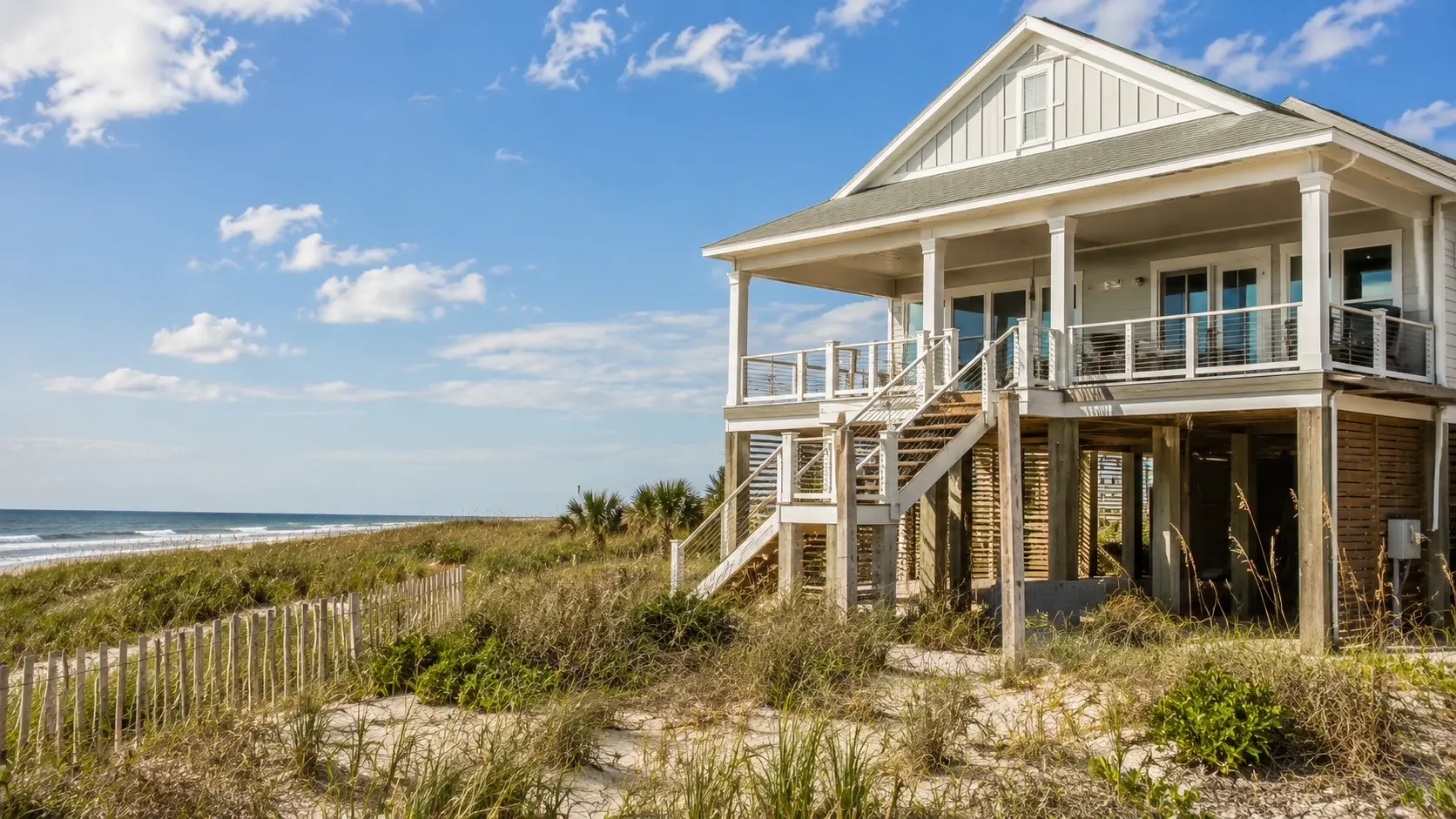
If your Wilmington beach house can no longer be insured, you still have viable paths to sell. The buyer pool and deal structure will look different than a typical insured home — but a fair outcome is achievable. This guide covers what uninsurability means in plain terms, how North Carolina disclosure rules apply, and the main exit options when traditional mortgage financing becomes difficult.
The key word is adaptability: you can still move toward a fair outcome, but the path often favors cash buyers, as-is sales, or structured deals that align with coastal insurance realities.
What It Really Means When Your Wilmington Beach House Can’t Be Insured
Uninsurability is a market-driven reality, not a single legal classification. When a property can’t be insured under a standard homeowners policy at an acceptable price, lenders and buyers shift expectations. The NAIC describes a framework for uninsurable risks rather than a universal definition — insurability hinges on risk assessment and market availability, not a fixed legal category.
This matters because insurance status directly influences who can finance a purchase. Flood coverage sits separately from standard homeowners policies. Many coastal homes rely on specialized programs for wind and flood risk. NFIP provides flood coverage with typical residential limits (building up to $250,000, contents up to $100,000), and lenders require flood insurance in FEMA-designated Special Flood Hazard Areas (AE/VE zones) for federally backed mortgages.
In North Carolina, most buyers with federally backed loans must carry homeowners insurance and applicable flood coverage. These requirements narrow the traditional buyer pool and push many sellers toward as-is cash paths or price adjustments that reflect the property’s altered risk profile.
Why Coastal Insurance Is Getting Harder and More Expensive
Private carriers have pulled back from high-risk coastal markets, and rate filings show increases in wind and homeowners coverage across many coastal NC counties. The NC Coastal Property Insurance Pool (CPIP) — also known as the Beach Plan — functions as a market of last resort for wind coverage in NC’s 18 designated coastal counties, pairing with primary policies that exclude wind.
Residential CPIP policy limits include a maximum building coverage of $1,000,000 and personal property coverage up to 40% of that limit. For sellers, these trends matter because they shape who can qualify for financing and what price and terms are realistic. The pool of qualified buyers shifts toward cash buyers and investors comfortable navigating insurance complexity, with price expectations adjusted accordingly.
Insurance challenges are a market headwind, not a dealbreaker. They change the buyer pool and deal structure — they don’t make coastal homes unsellable.
Can You Sell a Wilmington Beach House That’s Uninsurable?
Yes — but expect a smaller buyer pool (more cash and investor buyers), potential price adjustments, and a stronger emphasis on disclosures. When standard insurance isn’t available, most owner-occupant buyers can’t secure financing because mortgage lenders require homeowners coverage and flood insurance where applicable. Cash buyers and some portfolio lenders may proceed without standard coverage, relying on CPIP for wind or NFIP for flood where available.
Properties can be sold as-is to buyers who understand and accept the insurance situation, typically at a price that reflects the special risk profile. Uninsurable does not mean unsellable — it simply means adjusting who’s buying and how the deal is structured.
If the property’s condition is also a factor driving insurability concerns — deferred maintenance, mold, or structural issues — it’s worth understanding how those interact with your sale options.
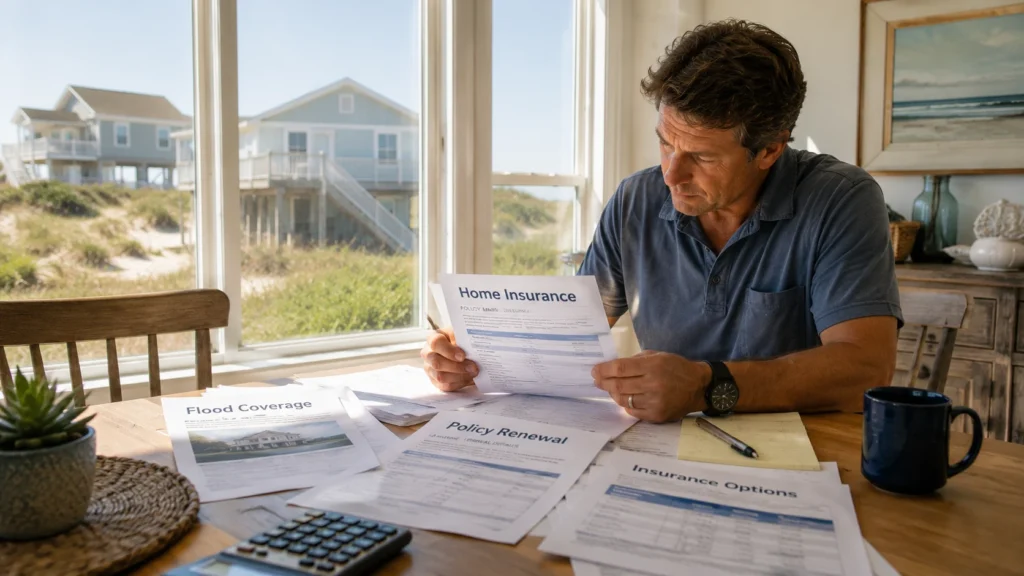
Practical Exit Options for an Uninsurable Wilmington Property
- Sell to a cash buyer or investor as-is — accelerates closing and removes insurance-dependent underwriting from the equation.
- List with an agent while disclosing insurance status — may attract buyers who can manage risk through CPIP or NFIP coverage overlays, but carries underwriting risk and longer timelines.
- Explore a short sale or loan workout — relevant if you’re underwater or facing mortgage stress alongside the insurance problem.
- Pursue seller financing or rent-to-own — for buyers willing to assume some risk while bypassing typical lender underwriting constraints.
- Pursue mitigation to restore insurability — addressing structural concerns or flood-hardening measures may reopen standard coverage options, though this requires upfront investment with uncertain results.
Cash paths typically close faster with less uncertainty but may command a lower price. Traditional listings carry higher potential returns but bring underwriting risk and longer timelines. Matching the exit path to the home’s insurance story and the local market is how sellers reach the best available outcome.
If the property has been sitting vacant during the insurance dispute or coverage lapse, there are additional considerations worth reviewing before you list or accept an offer.
Cash Offer vs. Traditional Listing When Insurance Is a Problem
A cash offer brings speed and certainty. A traditional listing can deliver higher top-line pricing if the buyer can secure necessary coverage. Here’s how the two paths compare:
| Path | Timeline | Financing/Insurance | Certainty of Close |
| Cash Offer | Typically faster | Less dependent on lender | Often higher |
| Traditional Listing | Longer | Dependent on lender | Can be lower |
Cash buyers aren’t bound by lender insurance requirements — they can close on terms that reflect the property’s risk profile, often within a shorter window and with fewer contingencies. Traditional listings rely on buyers who must obtain homeowners insurance and flood coverage, which can trigger underwriting delays, financing contingencies, and renegotiated terms.
The best path depends on your timeline, risk tolerance, and what you’re willing to concede on price or repairs. For NC-specific closing cost context, see the NC Department of Revenue’s deed transfer tax guidance.
North Carolina Disclosure Rules When Selling an Uninsurable Property
North Carolina sellers operate within the Residential Property and Owners’ Association Disclosure Statement (RPOADS), governed by NC General Statutes Chapter 47E. Sellers may mark ‘No Representation,’ but brokers retain duties to disclose known material facts and must update disclosures if information changes or proves inaccurate.
Insurance history and current insurance status can be material facts affecting risk and financing — making them relevant to buyers and lenders during underwriting. Buyers frequently ask about claim history, flood exposure, and current coverage status. Consult a North Carolina real estate attorney or licensed agent for specific advice on wording and disclosure strategy.
Failing to disclose known insurance-related problems can derail a sale late in the process if those issues are discovered during underwriting. Front-loading disclosure is almost always the better strategy.
The NC Department of Insurance (NCDOI) maintains a consumer helpline and complaint process if concerns arise about insurance handling. For NC-specific guidance, the NCDOI’s consumer resources are a practical starting point.
What the Sale Process Looks Like: Two Tracks
Track A — Cash buyer
Decision to sell → property walkthrough or photos → purchase offer → title search → closing date → funding → close. Cash paths often move in days to weeks rather than months, and lender-driven renegotiations are largely removed from the picture.
Track B — Traditional listing
Pre-listing prep → gather insurance history, flood-elevation certificates, claim records, and any engineer or mitigation reports → listing activation → offers with financing and insurance contingencies → inspections and appraisal → lender underwriting → potential renegotiations → closing.
A practical prep list for either track: insurance history and claim records, any engineer or mitigation reports, HOA documents, and flood-elevation certificates if available. Getting documentation in order before the first showing reduces last-minute surprises and builds buyer confidence.
For a broader look at what selling a home in Wilmington involves — costs, timelines, and what to expect at closing — ILM Home Offer has put together a practical overview for local sellers.
How Insurance Risk Is Reshaping Demand for Wilmington Beachfront Homes
Rising premiums and tighter underwriting push some owner-occupant buyers inland or toward newer, elevated construction. Investors and cash buyers remain active but price in the cost of insuring properties with known risks. Properties with well-documented insurance histories, credible mitigation details, and clear pathways to insurability tend to move more quickly than those with uncertain coverage.
Insurance risk doesn’t erase demand — it redirects it toward properties with transparent risk profiles and practical solutions, and toward buyers who prize speed and certainty. In a rising-cost environment, a fast and certain exit can be more valuable than stretching for top dollar in an uncertain financing picture.
Frequently Asked Questions
Can I sell my Wilmington beach house if no one will insure it?
Yes. You can still sell, but expect a smaller buyer pool — often cash or investors — and possible price adjustments based on the insurance situation. Uninsurable does not mean unsellable.
How fast can I sell an uninsurable property in Wilmington, NC?
Cash-based paths can close in days to weeks. Insurance realities often slow lender-backed sales significantly, but they don’t prevent cash closings. Timeline depends on title work and funding readiness.
Do I have to tell buyers my Wilmington house is hard to insure?
North Carolina uses the RPOADS disclosure framework. Sellers may mark No Representation, but brokers must disclose known material facts and update disclosures if information changes. Consult a local real estate attorney for specific guidance on how to disclose insurance status in your situation.
Can I back out of a contract if the property becomes uninsurable?
It depends on the contract terms. Financing and insurance contingencies can provide exit routes. Review your specific contract and consult local legal counsel before acting.
Who can I contact in NC about insurance handling concerns?
Contact the NC Department of Insurance consumer services to file a complaint or get guidance on insurance disputes.
Ready to Explore Your Options?
Coastal North Carolina’s insurance landscape can make selling a beach house challenging, but it’s far from impossible. Understanding what uninsurability means, how NC disclosure rules apply, and which exit path fits your situation puts you in control of the decision rather than reacting to it.
If you own a Wilmington beach house and want to explore a simple, no-pressure exit, ILM Home Offer buys coastal properties as-is for cash — no repairs, no insurance contingencies, no waiting. Visit ILM Home Offer for a no-obligation conversation about your property.