

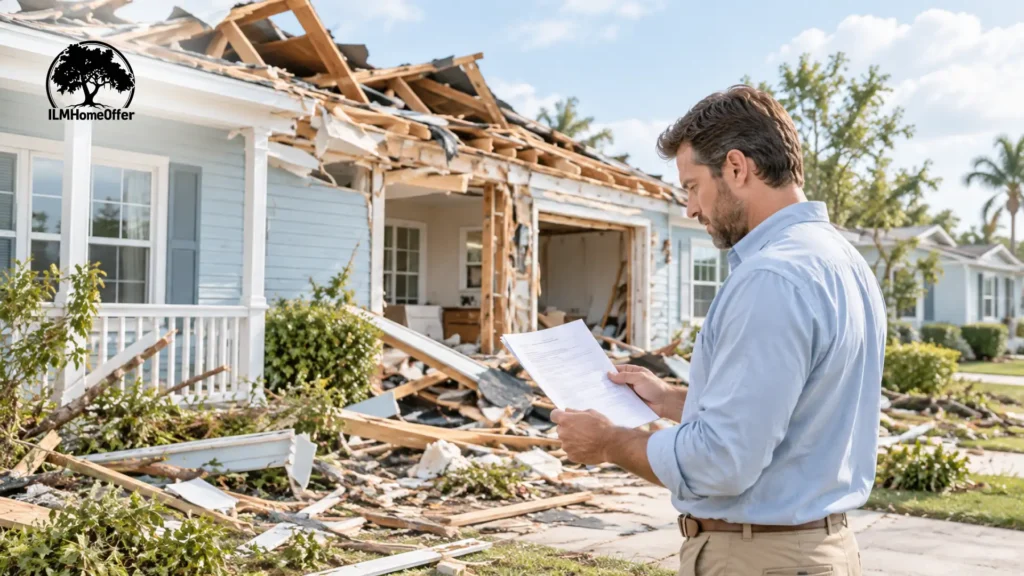
Your renewal notice arrives, and the total for homeowners, wind, and flood coverage has crept northwards again. You are already stretched thin, and now you are wondering if you can keep affording your Wilmington-area house.
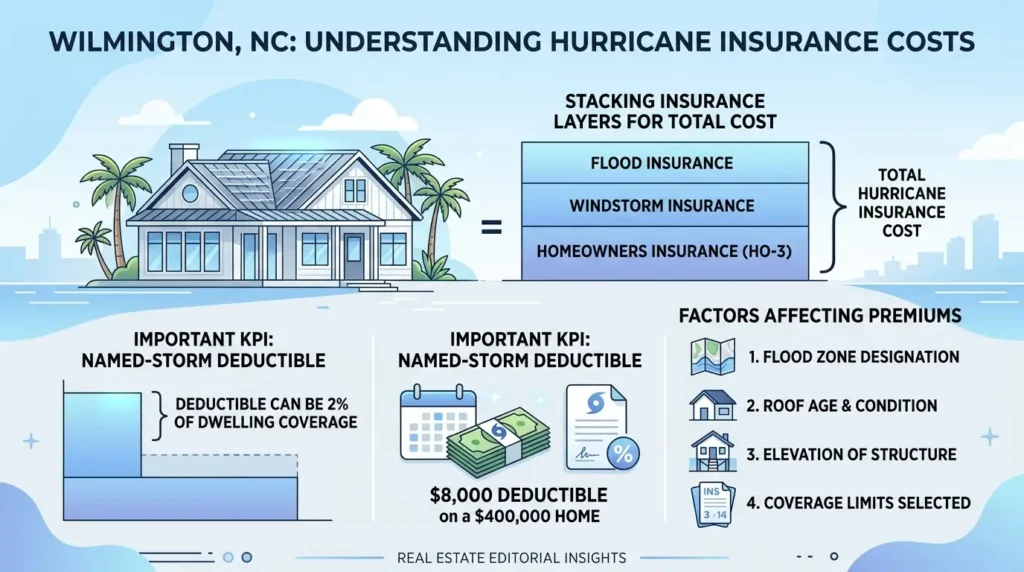
Hurricane insurance here is not one policy. It is a stack of coverage, and your real cost is the sum of every layer added together. Your exact price depends on your property, flood zone, roof condition, coverage limits, and carrier, so no single number applies to every coastal home.
This blog unravels that coverage stack, what actually drives the price higher, how Wilmington compares with inland North Carolina, and what to do if the math stops working for your budget.
Buyers, lenders, and investors all look closely at this same coverage stack when they evaluate a coastal property. Understanding it yourself puts you in a stronger position, whether you plan to keep the house or eventually sell it.
We will stay out of dense insurance jargon wherever possible. The goal is a clear, practical picture of what this coverage stack means for your house and your monthly cash flow.
What Hurricane Insurance Really Means for a Coastal NC Home
For a Wilmington-area home, “hurricane insurance” usually means three separate policies working together. Each one protects against a different kind of storm damage, and none of them fully substitutes for the others.
- A standard homeowners policy covering the structure, belongings, and many common perils
- A wind and hail policy, often required separately in beach and near-coast zones
- A separate flood policy covering storm surge and rising water
The National Association of Insurance Commissioners homeowners insurance guide confirms that standard policies typically cover wind damage but exclude flood damage from rising water. FEMA flood insurance resources explain that flood coverage is usually purchased separately, either through the National Flood Insurance Program or a private carrier.
A simple way to remember the split: homeowners and wind coverage handle what wind does to your house. Flood coverage handles what rising water does once it reaches your property.
Many coastal policies also carry a hurricane or named-storm deductible. This is often a percentage of your dwelling coverage rather than a flat dollar amount. That structure can mean a much larger out-of-pocket bill after a storm than a standard homeowners deductible would suggest.
An older cottage near the water may need all three policies plus a higher named-storm deductible. A newer home farther inland on higher ground may need a simpler, less expensive setup.
A cash buyer does not need a bank to approve each of these policies before closing. Even so, the total cost and limits of your coverage stack still influence how any serious buyer prices the house.
Consider a named-storm deductible set at two percent of a $400,000 dwelling limit. That works out to an $8,000 out-of-pocket cost after a covered storm, well above a typical flat homeowners deductible.
Typical Hurricane-Related Insurance Costs in Wilmington
Your actual cost depends on your home’s value, flood zone, roof age, deductible choice, and carrier. No single average applies fairly to every coastal property, so treat generic online estimates with caution.
The clearest way to see your real cost is to build your own worksheet using your current bills, rather than relying on someone else’s numbers.
| Coverage Layer | Where to Find It | Annual Amount |
| Homeowners premium | Declarations page or renewal notice | Your current amount |
| Wind and hail premium | Wind policy or wind pool bill, if separate | Your current amount |
| Flood premium | NFIP or private flood policy | Your current amount |
| All-in storm-related total | Add the three rows above | Your actual total |
Divide that total by 12 to see your true monthly cost, whether you pay it directly or through an escrow account. Compare that number against your other major bills using this cost of living in North Carolina breakdown.
Once your insurance total competes with your mortgage or rent payment, it is no longer a background expense. It becomes a core part of whether the house still fits your budget, and it deserves the same attention you give any other major bill.
A high insurance bill does not automatically mean you should sell. It does mean any buyer, whether financed or paying cash, will factor those premiums into their own math before making an offer.
Holding out for a higher asking price does not always translate into more money in your pocket. Extra months of carrying a costly premium while waiting for the right buyer can quietly erase that price difference.
How Homeowners, Wind, and Flood Premiums Stack Up
Two houses on the same Wilmington street can carry very different premiums, even when the homes look nearly identical from the curb. Elevation, flood zone, distance to water, and roof condition all shift the price.
| Coverage Layer | What It Generally Covers | Your Annual Amount |
| Homeowners policy | Structure and belongings, plus wind where not excluded | Your amount |
| Wind and hail coverage | Fills the wind gap where homeowners coverage excludes it | Your amount, if separate |
| Flood policy | Storm surge and rising water, not covered elsewhere | Your amount |
| Total protection | Combined annual cost of full storm coverage | Your total |
A house just slightly higher in elevation, or farther from the Intracoastal, can rate more favorably than a similar home nearby. An older roof, meanwhile, often pushes every layer of the stack higher at once.
Rebuild this table with your real numbers at each renewal so you can track the trend over time. If you want to see how this line item compares with your yearly tax bill, review this guide to property taxes in Wilmington.
Together, property taxes and hurricane-related insurance often carry more weight in a coastal budget than owners initially expect. Seeing both numbers side by side makes it easier to judge whether the full cost of ownership still makes sense.
Picture a rental in a low-lying part of Carolina Beach where flood and wind coverage have quietly grown into the largest carrying cost. Once the owner adds every line together, insurance alone is eating much of the rental’s margin.
A larger structure, a higher replacement-cost limit, or added contents value can raise every line in this table at once. Recheck the full stack whenever you increase coverage, rather than assuming only one line item changed.
What Drives Hurricane Insurance Premiums in Wilmington
Insurers price your risk using specific, identifiable factors rather than guesswork. Some of these factors you can influence directly. Others are simply part of owning property on the coast.
- Location and exposure: Proximity to the ocean, Intracoastal, or Cape Fear River generally raises both wind and flood risk.
- Home age and roof condition: Older roofs and outdated materials often carry noticeably higher premiums than newer, code-compliant ones.
- Elevation and foundation: Homes on pilings above expected flood levels may rate differently than slab-on-grade houses in low-lying areas.
- Coverage limits and deductibles: Higher dwelling limits and lower named-storm deductibles both tend to push premiums upward.
- Claim history: Multiple past claims can raise future pricing with many carriers, regardless of the property itself.
- Market conditions: The North Carolina Department of Insurance publishes current rate filings that are worth checking before assuming any specific trend applies to you.
These same factors shape how buyers and investors evaluate your property when you eventually sell. A house with a costly insurance profile is simply worth less to a buyer running realistic numbers.
Review current Wilmington real estate market trends alongside your own insurance costs. Together, they give you a clearer picture of how storm risk is shaping local demand right now.
Mitigation features can help offset some of these factors. Wind-rated roofs, impact-resistant openings, and flood vents may improve pricing or availability, depending on the carrier and your specific property.
An older wood-frame cottage with an aging shingle roof is typically viewed very differently than a newer brick home with modern construction. Roof shape, attachment method, and materials all factor into coastal underwriting decisions.
Wilmington vs Inland North Carolina: The Cost Gap
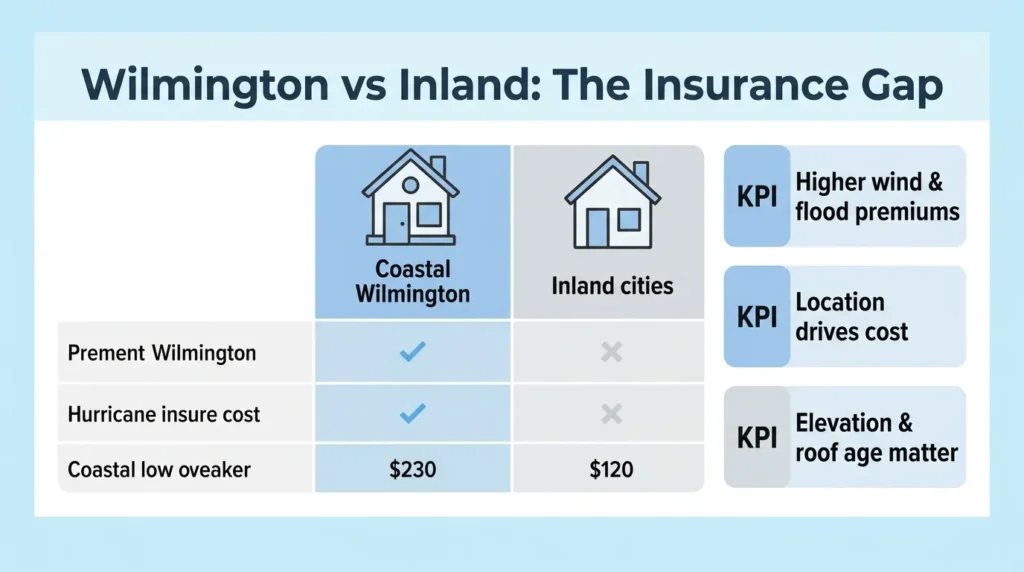
Coastal cities like Wilmington typically carry more wind and flood exposure than inland cities such as Raleigh, Greensboro, or Asheville. That gap can translate into a meaningfully higher total insurance cost for a similar-sized home.
Any fair comparison needs matching coverage limits, the same policy year, and one consistent data source. Without that structure, city-to-city comparisons can easily mislead rather than inform.
| City | Coverage Profile | Homeowners Premium | Notes |
| Wilmington | Same dwelling amount and deductible | Requires verified figure | Coastal wind and flood exposure |
| Raleigh | Same dwelling amount and deductible | Requires verified figure | Inland comparison point |
| Greensboro | Same dwelling amount and deductible | Requires verified figure | Inland comparison point |
| Asheville | Same dwelling amount and deductible | Requires verified figure | Inland comparison point |
If the coastal premium gap proves significant, it limits what buyers can comfortably offer for your home. Some buyers will still choose the coast despite the added cost, while others will shift toward inland markets instead.
If you are weighing a move away from the coast, compare this cost gap with affordable places to live in NC before making a final decision. Sale price and ongoing carrying costs both matter to the final math.
For a seller, this gap also affects how buyers behave. Higher required insurance can limit how much a buyer is willing to offer, since it directly reduces what they can afford each month.
Before publishing or trusting any city-by-city premium comparison, confirm the source uses one consistent methodology. Mixing data from different years or coverage assumptions can create a misleading picture of the real cost gap.
Budgeting for and Reducing Your Hurricane Insurance Costs
Treat your hurricane-related premium as a planned monthly expense rather than a yearly surprise. Add your homeowners, wind, and flood premiums together, then divide the total by 12 to set aside the right amount each month.
Check current rate filings before assuming your premium will keep rising at the same pace. Build a simple three-year projection using your own numbers, rather than guessing at future increases.
A few practical levers can help keep your costs in check over time:
- Upgrade your roof: Wind-rated materials that meet current code can improve pricing with some carriers.
- Add impact protection: Impact glass or code-approved shutters can reduce the chance of a severe wind claim.
- Adjust your deductible carefully: A higher named-storm deductible can lower your premium, but only if you can truly cover it out of pocket after a storm.
- Shop with a coastal specialist: A local independent agent often understands how different carriers view your specific flood zone, roof age, and elevation.
- Avoid small claims: Filing frequent minor claims can raise your future pricing, even when each individual claim seems reasonable.
- Maintain your credit and upkeep: Credit-based factors and overall home condition can influence pricing with many carriers, where allowed by state rules.
Get multiple quotes before renewing automatically. A local independent agent who regularly writes coastal business can often explain exactly how different carriers view your roof, flood zone, and elevation.
For owners facing major repair costs just to qualify for affordable coverage, it may be worth reviewing this cash home buying process. It does not require roof work or other upgrades before closing.
In the highest-risk zones, premiums may stay elevated even after upgrades and diligent shopping. When mitigation work is genuinely out of reach, it may be time to weigh other paths instead of chasing a lower rate.
When Rising Premiums Make Selling the Smarter Move
Hurricane-related insurance becomes part of any buyer’s monthly housing cost, whether they realize it upfront or not. Lenders factor required insurance directly into approval decisions using standard debt-to-income guidelines, so high premiums can shrink your pool of qualified buyers.
Run the numbers before deciding your next step, using your own real bills rather than assumptions.
- Add your annual homeowners, wind, and flood premiums to your property taxes and a realistic maintenance budget.
- Compare that combined total against your household income or, for a rental, your collected rent.
- Repeat this comparison across several recent years, not just the current one, to spot a real trend.
If the trend keeps worsening and needed upgrades are financially out of reach, a traditional sale may involve inspections, financing delays, and buyer pushback over insurance costs. Compare that route with the cost of selling a house in North Carolina and typical seller closing costs in North Carolina before committing to either path.
This decision comes up often for out-of-state heirs, second-home owners facing steep renewals, and landlords whose flood costs have quietly eaten into rental cash flow. Running the real numbers, rather than guessing, is what makes the choice clearer either way.
A local cash buyer prices storm risk into the offer directly, without requiring repairs, upgrades, or lender approval first. There is no mortgage underwriter double-checking your wind or flood coverage, and no financing contingency waiting to fall through.
Learn more about how a local cash buyer purchases houses, or check the Wilmington-area service area page to confirm coverage in your specific community.
FAQ
What is hurricane insurance in coastal North Carolina?
It is not one policy. It usually combines homeowners coverage, separate wind and hail coverage, and flood insurance, since each one covers a different kind of storm damage.
How much does flood insurance cost in coastal NC?
Cost depends on flood zone, elevation, foundation type, and coverage amount through NFIP or a private carrier. Get a current quote for your exact address rather than relying on general averages.
Is wind coverage included in a standard NC homeowners policy?
It depends on the carrier and your location. Many coastal policies limit or exclude wind coverage, requiring a separate wind and hail policy near the water.
What mainly drives hurricane insurance premiums in Wilmington?
Location, flood exposure, roof age, coverage limits, deductible choices, and claim history are the biggest factors insurers weigh when pricing coastal risk. Mitigation upgrades can sometimes help offset these.
Can I sell my Wilmington house as-is with high hurricane insurance costs?
Yes. A cash buyer can factor the insurance reality into one clear offer, while a financed buyer may struggle to qualify if premiums are especially steep.
Do I need a new roof before selling to a cash buyer?
Generally no. Cash buyers typically price expected repairs, including roof and mitigation needs, directly into their offer amount.
Should rising premiums push me toward selling?
If premiums, taxes, and repairs keep climbing while your income stays flat, it is worth comparing several years of carrying costs against a straightforward, numbers-based cash offer in writing.
If your renewal notices have gone from mild annoyance to real dread, you are not alone. Coastal North Carolina owners across Wilmington and the surrounding islands are wrestling with the same rising stack of homeowners, wind, and flood premiums.
Run the math for your own house: add up your all-in insurance, taxes, and a realistic repair budget, then compare that monthly number with your income or rent. If the numbers still work, you are planning on solid ground. If another round of increases would break your budget, a direct, no-obligation cash offer may be worth exploring.