
There’s a lot to handle when you’re selling a home in North Carolina, and some of the vocabulary can be similar and potentially confusing. During the sale process, there’ll be a lot of talk about deeds and titles, so you’ll need to know what each one means for property ownership. Not knowing can introduce needless stress and confusion into the process.
The main challenge is that a deed and title work together, but they aren’t the same. Knowing the difference between deed vs title can be one of the most important distinctions you can make during your house sale. That’s why we’ve put this article together for you. You’ll learn which one is the physical document, and which one is just a legal concept relating to public records. When the paperwork gets heavier than the Wilmington summer air, you’ll be glad you already have things sorted.
The Short Answer: Is a House Title and Deed the Same Thing?
In short, no, a house title and a deed are not the same thing. While most homeowners might use the terms interchangeably, we’re here to set the record straight.
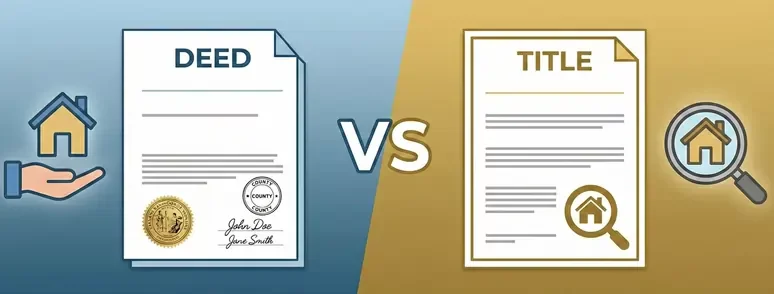
Your deed is a physical document. The deed shows the signature of the property owner and is recorded with the county. It’s a specific, legal document that has the legal description of the property. It’s used to show who the property owner is, following a sale. It will show the grantor and the buyer, and log the change of ownership.
The title, on the other hand, isn’t something physical you can hold. It’s a specific collection of legal rights, tied to your real property. The title is built from public records and reflects whether the current owner has the full title. If not, it will log the liens, disputes, or other claims against the property.
So, the deed is the document that transfers title, and the title is the legal status of who owns the property. Getting a clear grasp of how these two concepts work together is important, particularly when it’s time to prepare for closing or when reviewing property taxes.
What Is the Difference Between a Title and a Deed?
Knowing the workings of a deed vs title all starts with knowing that you’re dealing with two separate things. Let’s look at each one in detail.
The Deed: The Physical Legal Document
A property deed is a legal document that transfers property ownership from one party to another. It’s signed by the seller and delivered to the buyer. To make it all official, it’s recorded with the county at the time of transfer.
The deed includes the property’s full legal description, as well as the names of the buyer and seller, and the terms of the transfer. It’s tangible proof of who the new owner is, following a purchase.
North Carolina offers three types of deeds, with each offering a different level of protection. The three types are the general warranty deed, the special warranty deed, and the quitclaim deed.
The Title: The Legal Concept of Ownership
The property title isn’t something you can print out and hold. It’s a legal concept that indicates who has the legal right to the property. The title is the full bundle of rights connected to the home, including the right to use it, access it, and transfer it.
A title is created from public records, and it shows whether the current owner really has “full title”. During a home sale, these records are reviewed by a title company or real estate attorney. This way, they can verify that the property is free of liens, disputes, or similar claims.
Visualizing the Difference (The “Book” Analogy)
The best way to understand the difference is to visualize it. First, think of a home like a library book. The deed is the list of checkouts. The story itself is the list of rights that come with it, issues with the home, and the previously recorded chain of ownership.
Does Having a Deed Mean I Have a Clear Title?
Simply having a deed doesn’t necessarily mean you have a clear title. This is particularly important if something happened before the seller owned the property. You might hold the deed, but there could still be issues with the title. A contractor who was never paid could’ve placed a lien on the property. Back taxes could be owed, delaying the sale or eating into your proceeds.
What is a “Cloud” on a Title?
A “cloud” on a title refers to anything that challenges or disrupts the legal right to own or transfer property. This can include unpaid mortgage payments, tax liens, judgments, or an old quitclaim deed recorded by one party who had a limited interest in the property. Boundary disputes involving property lines can also create clouds.
The Importance of the Title Search in NC
A sufficiently thorough title search is the best way to uncover problems before closing. Before closing, a real estate attorney or the title company comb through decades of public records to make sure the seller is legally allowed to sell the property.
One of the more popular ways for homeowners to get a working knowledge of their local market is by watching it. By keeping an eye on the local market, for example, you can start to get a feel for what’s normal and what’s changing for your specific market.
Who Holds the Title to My House?
Who holds the title depends on where you are in the ownership and financing process. If you’ve paid off the home completely, you’re the current owner with full title, and the county’s public records will show you as the legal property owner.
If the property changes hands, the deed is recorded with the county. The title to the property is transferred to the new owner, and ownership has officially changed hands.
If you’re still making mortgage payments, you hold the title, but your lender has a secured interest in the property. That interest doesn’t stop property sales, but it does need to be satisfied during the transfer. That transfer may also be impacted by certain rights or hardships, like selling a house in bankruptcy.

How Deed and Title Transfer Work When Selling Your House Fast
Transferring a deed and confirming title are essential steps in any property sale, but the process can look very different depending on the path you choose.
Transferring Title in a Traditional Sale
In a standard real estate closing, the buyer and seller agree on terms, sign a contract, and move into due diligence. A title company or real estate attorney performs a title search to confirm that the current owner can legally transfer the home.
At the closing table, the grantor signs the deed, the buyer pays the funds needed for purchase, and the deed is recorded with the county.
Selling to a “We Buy Houses” Company (The Easier Path)
For homeowners looking for the simplest path forward, working with a cash buyer can be a perfect option. A cash buyer like ILM Home Offer can cut the timeline down to just a few days. Instead of worrying about title complications or waiting for buyer financing, you can move right into review and closing.
This is one of the most popular ways to sell a house in places like Castle Hayne and Jacksonville. Sellers need to move quickly or deal with a property that’s become a burden.
Frequently Asked Questions About Deeds and Titles
Which is more important, title or deed?
Both matter, but they serve different purposes. The deed is the tangible document that transfers ownership from the seller to the buyer. Without it, you can’t legally complete the transfer. The title, however, is the legal concept that shows whether someone has the legal right to own and sell the property.
Can you be on the deed but not the mortgage?
Yes, most North Carolina homeowners are listed on the property deed, even though they may not be responsible for the mortgage payments. Being on the deed means you’re an owner. Being on the mortgage means you have a payment agreement with a lender. Being on one or the other and not both is a common situation for family members and adult children.
Does a deed override a title?
No. A deed doesn’t override a title because the two serve different roles. The deed handles the physical act of recording the transfer, while the title reflects whether the transfer is legally valid.
What is the difference between a land title and a land deed?
The land deed is the legal document that contains the legal description of the property and identifies the grantor and buyer. The land title represents the collection of rights associated with that land, including who can access it, transfer it, and claim it. The deed is something you sign, and the title is a status in a legal file.
Can I sell my house if I lost my deed?
Yes, in most cases, you can still sell your house, even if you lost your deed. The county recorded the deed when it was transferred to you when you bought the home. As long as the title to the property is clear, and the seller owned the home before the transfer, a new deed can be obtained relatively easily.
Conclusion
There you have it. A deed and a title work together, but they’re not the same. The deed is the recorded legal document that shows a property has been transferred, while the title represents the deeper legal rights and history attached to that property.
If you need any additional guidance in your journey to sell your house, ILM Home Offer is here for you. We’re ready to help you find the information and solutions you need to move forward with confidence.